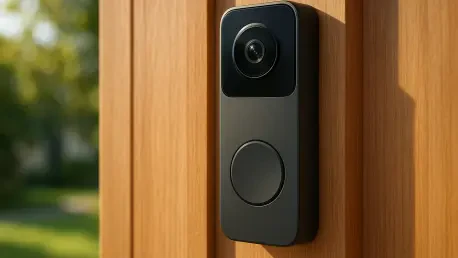

The contemporary home security market is currently witnessing a massive technological pivot from reactive motion sensors to proactive artificial intelligence systems. For years, the primary complaint from users centered on notification fatigue, a condition where homeowners begin to ignore security alerts because cameras frequently pinged them for irrelevant movements like wind-blown trees or passing cars. This frustration fueled the development of Apple Intelligence, Google’s Gemini for Home, and Amazon’s Ring Smart Alerts Plus, which represent a new frontier where cameras do not just see movement—they interpret intent. By utilizing complex machine learning models, these devices aim to differentiate between a neighbor delivering a package and a stranger loitering with suspicious motives. As the technology matures through 2026 and moves toward 2028, the focus has shifted entirely toward contextual awareness, making the distinction between recording an event and understanding its significance the most critical factor for modern consumers.
Distinct Philosophies in Artificial Intelligence Processing
Apple Intelligence: Prioritizing on-Device Privacy
Apple’s entry into the AI security space is defined primarily by its rigid commitment to on-device processing, a strategy designed to appeal to privacy-conscious users. Utilizing the Neural Engine integrated directly into HomeKit-compatible hardware like the Aqara G400, “Intelligent Summaries” are generated locally without ever sending sensitive video data to a central server. This approach offers a significant security advantage, as the analysis remains within the home’s perimeter. During rigorous testing, Apple’s system proved highly accurate at identifying basic objects such as people, vehicles, and animals, consistently reaching a 95% accuracy rate for standard detection. However, this minimalist philosophy results in descriptions that are often literal and restrained. While it can identify a person with a bag, it may fail to infer the deeper intent behind the action or recognize specific commercial branding on vehicles as effectively as its cloud-reliant competitors.
Google Gemini: The Strength of Cloud-Based Context
In stark contrast to Apple’s local strategy, Google’s Gemini for Home leverages the immense computing power of the cloud to deliver deep scene understanding. This allows the AI to move beyond simple object identification and provide a human-like narrative of complex events occurring on a property. Google’s system is capable of making sophisticated inferences, such as recognizing that a delivery truck is blocking a neighbor’s driveway or noting that a visitor’s repeated pacing suggests they might be lost or searching for a specific address. While the platform provides the most detailed and nuanced descriptions available, the reliance on cloud processing introduces a notable trade-off in the form of latency. There is a consistent two to three second delay between an event occurring and the arrival of a notification on the user’s phone. Furthermore, accessing these high-level features requires a premium subscription, making it a more expensive long-term investment for the homeowner.
Performance Evaluation and Actionable Security
Amazon Ring: Direct Alerts and Security Action
Amazon’s Ring platform occupies a strategic middle ground by focusing on “Smart Alerts Plus,” which prioritizes security utility over descriptive storytelling. Like the Google ecosystem, Ring utilizes cloud-based analysis, but its output is specifically tuned to tell the homeowner exactly what they need to know to take immediate action. In scenarios involving suspicious activity, the Ring system proved to be the most direct, explicitly labeling behaviors as “suspicious” and prompting the user to review the live footage immediately. This makes it a highly effective tool for those who prioritize active monitoring and deterrents over environmental nuance. While it lacks the fluid narrative style of Gemini, Ring excels in reliability and integration with the broader Alexa environment. The primary focus remains on the “Ring of Security,” where the AI acts as a digital sentry that filters out the noise of everyday life to highlight only the events that could represent a threat to the property or the residents.
Market Trends: The Rise of Subscription Intelligence
The current competition between these three tech giants has highlighted a significant shift in how security features are sold to the public. Identification accuracy for human subjects has become nearly universal, with most high-end models achieving roughly 95% effectiveness across various lighting conditions. The real battleground has moved toward contextual accuracy, where interpreting human behavior is the new standard of excellence. This transition has also solidified the role of the subscription economy in the smart home sector. While Apple offers its intelligence features as part of its hardware and iCloud ecosystem, both Amazon and Google have integrated their most advanced AI capabilities into monthly recurring payment tiers. This suggests that advanced security intelligence is no longer viewed as a one-time hardware feature but as a continuous service that requires ongoing investment. Consequently, homeowners must now consider the total cost of ownership over several years rather than focusing solely on the camera’s initial price tag.
Strategic Considerations for Future Deployment
Determining the Ideal Security Ecosystem
The comparative analysis of these platforms demonstrated that there was no single “perfect” camera for every household; instead, the best choice depended on specific user priorities. If a homeowner valued privacy and the fastest possible notification speeds, Apple’s local processing was the superior choice. Conversely, if a user desired the most detailed and intelligent description of their surroundings, Google’s Gemini offered unparalleled depth that humanized the raw video data. For those who wanted a balance of affordability and direct, actionable security warnings, Amazon’s Ring remained the industry standard for functional monitoring. Each platform successfully addressed the problem of notification fatigue, though they did so through fundamentally different technical architectures. The data indicated that the industry moved away from passive recording, transforming cameras into active observers. This evolution ensured that the smart home of today was more responsive to real threats while remaining less intrusive during the routine of daily life.
Final Steps for Enhanced Property Protection
Homeowners who sought to upgrade their security infrastructure were encouraged to evaluate their current network bandwidth and privacy requirements before committing to a specific AI tier. It was found that a high-speed, low-latency connection was essential for cloud-dependent systems like Gemini and Ring to function at peak performance. Furthermore, users were advised to conduct periodic audits of their notification settings to ensure the AI filters were correctly identifying familiar faces and ignoring repetitive non-threats. The transition to intelligent contextual awareness represented the most significant leap in residential safety technology in recent memory, effectively silencing the noise of irrelevant motion alerts. By selecting a system that aligned with their specific environmental needs, residents gained more than just a camera; they acquired a digital guardian capable of discerning the difference between a neighborhood gesture and a potential security breach. This strategic alignment between human needs and machine intelligence provided the ultimate foundation for a secure and connected living environment.