


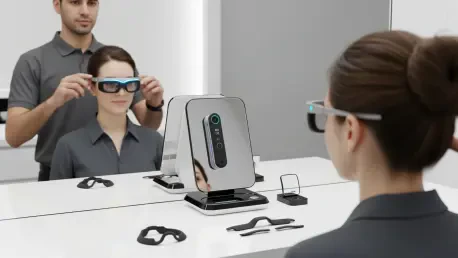

When a company that sells hundreds of millions of display panels each year hints that its first smart glasses may ship without any display at all, the contradiction begs for an explanation that goes beyond specs and slogans. Why would a display giant lead with camera-and-audio frames instead of flashy AR overlays? The early answer arrives through leaks that show restraint, not spectacle.
Renders circulating from well-known tipsters depict everyday eyewear with a camera and open-ear speakers, not a face-mounted screen. This restraint carries stakes: if Samsung validates a simpler formula, “smart glasses” for mainstream buyers could shift toward AI assistance, capture, and ambient audio—redefining expectations for what matters first.
Moreover, a display-free debut could be a shrewd calibration of comfort, weight, and price. Rather than chase unfinished optics, Samsung appears to prioritize wearability and social acceptance, setting a foundation for software and services that outlast rapid hardware cycles.
Why This Moment Matters
Smart glasses have historically swung between novelty and niche, but the pendulum now moves toward daily-wear utility. Lightweight frames that record photos, field quick voice queries, and stream audio align with the cadence of modern life, where micro-interactions beat marathon screen time.
Comfort, battery life, privacy, and social norms still make or break adoption. Users reward gear that feels invisible and respectful: a featherweight fit, clear recording cues, and battery performance that supports short, frequent sessions without anxiety. Hitting those marks invites repeat use—and habit is the true moat.
Samsung’s arrival could activate the category in ways smaller players cannot. With Galaxy phones, watches, and an XR pipeline, the company can bundle services, simplify onboarding, and court developers at scale. A two-step roadmap—first simpler glasses, then microLED AR—tracks how wearables usually mature: nail the basics, then layer the magic.
What Leaks Reveal, and What They Signal
Leaked renders suggest a design akin to Meta’s base Ray-Ban model: lightweight frames, photochromic lenses, and an unobtrusive profile. The code name “Jinju” points to this display-free first release, while “Haean” reportedly denotes a microLED follow-up planned after the market digests round one.
Under the hood, expectations center on a Snapdragon AR1, a 12 MP Sony IMX681 camera, Wi‑Fi and Bluetooth 5.3, directional speakers, and roughly 50 grams on the nose. A 155 mAh battery implies short, intentional sessions—think quick photos, calls, voice notes—rather than heads-up visuals or extended video streaming.
On software, Android XR with Google’s Gemini integration sets a multimodal baseline for voice-led interactions. Assistant branding remains fluid; Bixby or even a Perplexity tie-in has been floated, hinting at a period of experimentation where the winning mix comes from user behavior, not prelaunch theory.
Voices and Evidence
“Renders shared by OnLeaks and AndroidHeadlines indicate a display-free first-gen device closely resembling everyday eyewear.” That framing echoes a broader analyst view: removing a display cuts weight and complexity, which historically improves comfort, reduces costs, and widens the addressable audience.
Experts in XR argue that staged rollouts buy time for microLED supply chains to scale and for power efficiency to catch up. The gap year, so to speak, lets software teams refine wake words, latency, and context handling—capabilities that matter just as much as optics when glasses become companions, not gadgets.
Anecdotes from early adopters of camera-and-audio frames show high usage for spontaneous photos, calls, and voice reminders, but also highlight battery jitters and social friction around recording. Privacy advocates consistently push for visible capture indicators and audible shutters, noting that transparency features measurably reduce negative reactions in public.
What To Do Next: Buyers, Builders, and Backers
Prospective buyers should treat fit like a feature: test nose pads, check temple pressure, and weigh lens options, including photochromic and prescription. Align expectations with use cases that shine today—hands-free capture, calls, fast answers—and skip if heads-up visuals are nonnegotiable. Configure privacy defaults from day one with LED and shutter cues on; build a charging routine that favors short, frequent top-ups, and watch for bundles tied to Galaxy phones or watches.
For developers and creators, prototype voice-first flows on Android XR and lean on Gemini for multimodal prompts, summaries, and on-device context. Design micro-interactions that finish in under ten seconds, with crisp audio cues and confirmations. Bake in consent flows and recording indicators, and structure features so they scale cleanly from audio-only today to microLED visuals later without refactoring the core experience.
For market watchers and investors, track attach rates with Galaxy phones, daily active minutes, and 30/90-day retention as early signals of product-market fit. Monitor sentiment on privacy, battery satisfaction, and assistant clarity; stumbles here can stall momentum. The July Unpacked moment, retail cadence, SDK updates, and any operator or enterprise pilots will outline whether phase one sets the stage for a credible AR leap.
The Road Ahead
As hints coalesced into a coherent picture, a display-free debut looked less like hesitancy and more like discipline. The company tested appetite for camera-and-audio glasses, used real-world wear to tune assistants and ergonomics, and set a path toward microLED only after the fundamentals landed. Buyers prepared checklists, developers built voice-first utilities, and investors watched usage curves instead of hype cycles, positioning the category for a practical climb rather than another boom-bust loop.







