



The emergence of a visible cable on the Project Phoenix prototype confirms Meta is moving away from all-in-one headsets to achieve the ergonomic balance necessary for all-day wear. This strategic pivot was accidentally disclosed through a retracted software update within the Meta ecosystem, specifically an application designed for prescription lens calibration. By stripping away the heavy internal batteries and processing units typically found in the Quest lineup, the company is signaling a foundational change in its hardware philosophy. This new direction prioritizes a sleek, glasses-like aesthetic over the traditional visor-style footprint, aiming to capture a broader audience that finds current headsets too cumbersome for daily productivity. The leak suggests that the development has reached a stage of logistical maturity where third-party optical support is already being integrated into the software framework. This indicates that Meta is not just experimenting with a concept but is actively building the infrastructure for a consumer-ready wearable.
Architectural Evolution: Shifting the Computing Burden
The design language of Project Phoenix represents a bold departure from the self-contained units that have dominated the market since the early days of modern virtual reality. By offloading the primary silicon and power supply to an external compute puck, Meta has effectively halved the weight resting on the bridge of the nose and the forehead. This split-processing architecture is not entirely new to the industry, but its implementation here appears more refined, focusing on a high-bandwidth tether that ensures the headset remains as thin as premium eyewear. Such a move directly addresses the chronic issue of neck fatigue and thermal discomfort that has plagued previous iterations like the Quest Pro. Instead of housing a cooling fan and a large lithium-ion cell against the user’s face, the Phoenix unit stays cool and light, allowing the external pack to handle the heavy lifting while tucked away in a pocket or clipped to a belt for maximum user comfort.
Building on this structural foundation, the separation of components allows for a modularity that could redefine how users upgrade their hardware in the coming years. By decoupling the display optics from the processing core, there is a theoretical possibility that consumers could eventually upgrade their compute puck without needing to replace the entire headset assembly. This approach mirrors the evolution of high-end specialized computing, where the interface and the engine are treated as distinct entities. In the context of 2026, where spatial computing is becoming a legitimate alternative to laptop-based workflows, this flexibility is essential. The leaked images show a refined, minimalist frame that lacks the bulk of traditional tracking rings and sensors, suggesting a focus on industrial beauty that rivals contemporary smart glasses. This shift highlights a clear intention to move mixed reality out of the gaming den and into the professional environment where appearance and comfort are paramount.
Redefining Interaction: The End of Physical Controllers
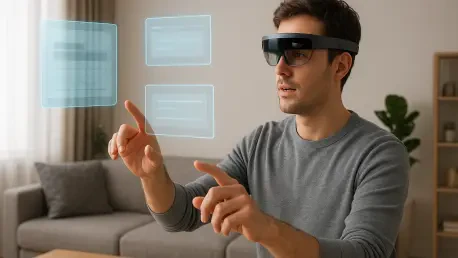
One of the most significant shifts introduced with the Phoenix hardware is the total abandonment of physical motion controllers in favor of advanced computer vision and hand tracking. While the Quest series has long offered hand-tracking as an alternative input method, Phoenix appears to be built from the ground up as a controller-free device. This transition requires a highly sophisticated array of external-facing cameras and depth sensors capable of mapping finger movements with sub-millimeter precision. By removing the need for handheld peripherals, Meta is attempting to lower the barrier to entry for non-gamers who may find traditional joysticks and buttons unintuitive. The interaction model shifts toward natural gestures, such as pinching the air to select items or swiping through virtual windows as if they were physical objects. This makes the experience feel more like an extension of the body rather than a tethered digital simulation, fundamentally changing the user’s relationship with the interface.
To support this ambitious hardware change, the company has reportedly prepared a suite of developer tools and instructional sessions ahead of its upcoming Connect conference. These sessions, focused on Practical Guides to Controller-Free Interaction, provide a clear roadmap for the software ecosystem that will inhabit the Phoenix platform. Developers are being encouraged to move away from button-based menus and toward spatial UI that responds to eye gaze and voice commands in tandem with hand gestures. This multi-modal approach ensures that the lack of physical buttons does not result in a loss of functionality but rather an expansion of creative possibilities. By standardizing these interactions across HorizonOS, Meta is creating a cohesive user experience that remains consistent whether a person is using a high-end productivity headset or a pair of lightweight glasses. This level of software preparation suggests that the transition to a controller-less future is not just a hardware experiment but a core pillar of the company’s strategy.
Strategic Implementation: Navigating the Next Spatial Paradigm
To successfully integrate Project Phoenix into existing professional and social workflows, organizations and developers looked toward more adaptable software frameworks that emphasized user comfort over raw power. The industry observed a steady transition where high-fidelity passthrough and ergonomic weight distribution became the primary metrics for success, replacing the old focus on total immersion. For businesses seeking to leverage these advancements, the next logical step involved auditing current digital assets to ensure they were compatible with controller-free, gesture-based navigation models. As the hardware continued to shrink in size, the value of a robust, cross-device ecosystem like HorizonOS became increasingly apparent for long-term scalability. These developments suggested that the ultimate goal of wearable technology was to disappear into the background, providing utility without the friction of traditional electronics. Moving forward, the focus remained on refining the interaction between the physical and digital worlds.
Looking back at the trajectory of wearable technology, the most effective implementations were those that prioritized human-centric design over technical specifications alone. The shift toward Project Phoenix highlighted the necessity of balancing high-fidelity visuals with the physical reality of human anatomy. To prepare for this future, developers began prioritizing light-weight code and efficient assets that could perform seamlessly on varied hardware profiles. These steps were instrumental in shifting public perception of mixed reality from a niche hobby to a fundamental tool for communication and creativity. By fostering an open ecosystem that accommodated diverse accessibility needs, such as the integrated prescription support seen in the leaks, the industry set a new standard for inclusivity in tech. The path forward thereafter involved expanding these spatial computing capabilities to more affordable price points while maintaining the premium experience defined by the Phoenix prototype. This historical transition served as the blueprint for the future.







