


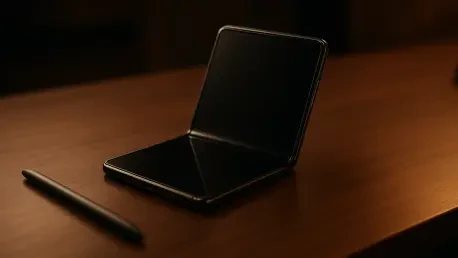

The trajectory of the foldable market has finally reached a state of technological equilibrium where the Samsung Galaxy Z Fold8 Ultra represents a definitive vision of the productivity-first mobile workstation. For years, consumers have navigated a landscape of compromise, weighing the benefits of a massive internal display against the drawbacks of lackluster battery endurance and slower charging cycles. This latest iteration seeks to bridge that gap by integrating the most advanced silicon available with a structural redesign that prioritizes durability and user comfort. The purpose of this review is to determine whether this hardware justification warrants the steep investment required for the “Ultra” tier, particularly as competition in the foldable space reaches an all-time high.
Assessing the Value of Samsung’s Ultimate Foldable
The primary question surrounding the Galaxy Z Fold8 Ultra is whether the shift in nomenclature and pricing truly reflects a significant leap in capability or if it is merely a rebranding of incremental progress. Historically, the Fold series has struggled to match the sheer photographic prowess and battery longevity of the S-series Ultra models, leaving power users in a difficult position. With this release, Samsung has attempted to rectify those long-standing foldable challenges by focusing on display legibility, charging efficiency, and a more robust internal structure. It is a device built for the individual who views their smartphone as a primary computing tool rather than a secondary accessory.
When examining the overall value proposition, one must consider the environment of the current mobile market. High-end devices are now expected to last for years, with software support cycles extending into the next decade. The Galaxy Z Fold8 Ultra positions itself as a future-proof investment, boasting hardware that is designed to withstand the rigors of heavy multitasking and intensive media consumption. While the price remains high, the inclusion of a more expansive battery and a drastically improved screen coating suggests that the “Ultra” moniker is not just marketing fluff but a commitment to a higher standard of mobile excellence.
Furthermore, the ergonomic refinements play a significant role in the overall assessment of the device’s worth. A foldable phone is only as good as its hinge and the ease with which a user can transition between screens. By addressing the physical resistance and the thickness of the frame, Samsung has created a device that feels less like a prototype and more like a finished, premium product. This attention to detail, combined with the technical upgrades, forms the basis of a strong argument for the device’s positioning at the top of the foldable hierarchy.
Technical Specifications and Core Features
At the heart of the Galaxy Z Fold8 Ultra lies the Snapdragon 8 Elite Gen 5 processor, a piece of silicon optimized specifically for the Galaxy ecosystem. This chipset is built on a cutting-edge 3nm process, designed to handle the unique thermal and power demands of a dual-screen device. The “Flex Titanium” structural design is perhaps the most significant physical upgrade, incorporating a new alloy that provides a rigid yet lightweight frame. This material is not limited to the exterior; a flexible titanium-alloy sheet is now integrated beneath the display panel itself to provide better support and impact resistance.
The internal 8-inch display is the centerpiece of the hardware suite, featuring a resolution of 2256 x 2504 pixels. This increase in pixel density ensures that text remains sharp even when viewed at close distances, a critical factor for those using the device for document editing or detailed design work. To combat the perennial issue of screen glare, Samsung has introduced a specialized anti-reflective coating that mimics the properties found on high-end monitors. This technology works in tandem with the “Easy Open-and-Close” hinge mechanism, which uses a new cam and magnet system to make the unfolding process feel effortless.
Power management has also seen a substantial upgrade, with the device now housing a 5,000mAh battery. This is a notable increase from previous generations and is complemented by 45W wired charging and 20W wireless charging capabilities. The camera system is led by a 200MP main sensor, which is now supported by a new 50MP ultrawide sensor designed to improve low-light performance. Every aspect of the specification sheet suggests that Samsung has focused on the “core” elements of the user experience, ensuring that the hardware is as reliable as it is powerful.
Real-World Performance Evaluation
Processing Power and Thermal Efficiency
Testing the Snapdragon 8 Elite Gen 5 reveals a chip that is capable of handling virtually any task with ease. In synthetic benchmarks, the processor shows a significant lead over its predecessors, particularly in multi-core performance which is essential for the Ultra’s advanced multitasking features. Users can run multiple apps in split-screen mode while a video renders in the background without experiencing any noticeable lag or interface stutters. The “for Galaxy” optimization ensures that the clock speeds are pushed to their safe limits, providing a snappier feel to the One UI interface.
However, the laws of physics still pose a challenge for this foldable form factor. Despite the introduction of an expanded graphite cooling structure, the device does exhibit thermal throttling during extended sessions of high-fidelity gaming. When the internal temperatures rise, the system aggressively scales back the processor’s performance to prevent damage, which can lead to a drop in frame rates after about thirty minutes of heavy load. While this is less noticeable in daily productivity apps, gamers should be aware that the thin profile of the foldable limits its ability to dissipate heat as effectively as a dedicated gaming phone or a thicker slab flagship.
Display Quality and Outdoor Legibility
The visual experience on the 8-inch internal display is nothing short of exceptional. The increased pixel density makes a tangible difference when reading small text or viewing high-resolution imagery. Color accuracy is maintained across the entire surface, and the 120Hz refresh rate ensures that animations remain fluid. The standout feature, however, is the anti-reflective coating. In direct sunlight, where previous foldables often became difficult to see, the Galaxy Z Fold8 Ultra remains perfectly legible. It effectively neutralizes reflections that usually plague the plastic-like surface of foldable screens.
In terms of brightness, the panel reaches a peak of 3,000 nits during specific high-brightness scenarios. While this peak is typically reserved for small highlights in HDR content, the overall full-screen brightness is also high enough to ensure comfort in bright environments. The contrast remains infinite due to the OLED technology, and the transition from the 6.5-inch cover screen to the internal display is seamless, with consistent color calibration between the two panels. The screen is the strongest asset of the device, providing a canvas that feels expansive and professional.
Battery Endurance and Charging Speed
The transition to a 5,000mAh battery has finally given the Fold series the endurance it has long lacked. During rigorous “Active Use” testing, which includes a mix of web browsing, video streaming, and social media navigation, the Z Fold8 Ultra consistently outlasts its predecessors. It is now possible for a heavy user to make it through a full workday without reaching for a charger, even when primarily using the large internal screen. This level of reliability is a major step forward for the category and brings the foldable closer to the standards set by traditional flagship devices.
Charging speeds have also been modernized, with the 45W wired charging providing a much-needed boost in efficiency. A full charge from zero to one hundred percent takes significantly less time than before, allowing for quick top-ups during the day. The move to 20W wireless charging is equally welcome, offering a more viable alternative to wired connections for those who prefer the convenience of a charging stand. While these speeds are not the fastest in the broader smartphone market, they represent a high point for Samsung’s foldable lineup and adequately serve the needs of the target audience.
Camera and Audio Fidelity
The photographic capabilities of the Z Fold8 Ultra are led by the massive 200MP sensor, which produces images with incredible detail and dynamic range. In daylight, the photos are sharp and exhibit the characteristic vibrant color profile that Samsung users have come to expect. The real innovation, however, is the new 50MP ultrawide lens. This sensor significantly improves low-light photography and video, capturing more light and reducing the noise that typically affects wide-angle shots in dark environments. The 3x telephoto lens remains a solid performer for portraits and moderate zoom, though it has not changed significantly from the previous iteration.
Audio performance is a more nuanced story. The redesigned speakers are capable of high volume and offer a deep, rich bass that enhances the experience of watching movies or playing games. However, this focus on the low end has resulted in a slightly muffled mid-range. Vocals and dialogue can sometimes feel less crisp compared to the older Galaxy Z Fold7, which had a more balanced soundstage. While most users will appreciate the added “thump” in the audio, those who prioritize vocal clarity might find the tuning to be a minor step backward. Nevertheless, the stereo separation remains excellent, providing an immersive soundscape when the device is held in landscape mode.
Pros and Cons of the Galaxy Z Fold8 Ultra
The strengths of the Galaxy Z Fold8 Ultra are primarily found in its refined hardware and significantly improved utility. The battery life is arguably the most important upgrade, as it removes the constant anxiety of running out of power during a busy day. Faster charging speeds further enhance this convenience, making the device much easier to live with on a daily basis. Moreover, the anti-reflective coating and the massive 3,000-nit brightness peak set a new standard for foldable display quality, ensuring that the screen is usable in virtually any lighting condition. The hinge also feels more sophisticated, offering a smoother action that makes the act of opening the phone feel less like a chore and more like a premium interaction.
On the other hand, there are several weaknesses that persist or have been introduced with this generation. The most prominent issue remains the screen crease, which, despite the new “Flex Titanium” structure, is still visible and can be felt under the finger. While it is easy to ignore during active use, it serves as a reminder of the inherent limitations of current foldable technology. Thermal management is another area of concern, as the aggressive throttling under heavy load limits the potential of the Snapdragon 8 Elite Gen 5 processor during sustained tasks. Additionally, the audio profile, while powerful, lacks the clarity of its predecessor, and the high price of the “Ultra” model remains a significant barrier for many potential buyers.
Final Assessment and Recommendation
The Galaxy Z Fold8 Ultra represents a calculated effort to perfect the traditional foldable form factor. By focusing on the fundamentals—battery, charging, and display—Samsung has created a device that is more practical and reliable than ever before. The technical refinements are meaningful and address the most vocal complaints from the user base. However, these improvements come at a high cost, and the device does not represent a revolutionary departure from the design language established by earlier models. It is a highly polished evolution, but one that asks for a substantial financial commitment from the consumer.
When comparing the Ultra to the standard Galaxy Z Fold7, the choice becomes one of necessity versus value. The Z Fold7 is a highly capable device that offers the same core foldable experience and even slightly better audio clarity for a much lower price. However, it lacks the superior battery life, the faster charging, and the advanced anti-reflective screen of the Ultra. For the professional who needs the most resilient and long-lasting tool available, the Ultra justifies its existence. For the casual user or the budget-conscious enthusiast, the Z Fold7 remains the more pragmatic choice, providing most of the benefits of a foldable without the “Ultra” premium.
Conclusion and Buyer’s Advice
The Galaxy Z Fold8 Ultra stood as the most comprehensive version of the foldable smartphone that has been produced to date. It successfully addressed the structural and power-related hurdles that had previously held the category back from mainstream perfection. The introduction of the “Flex Titanium” frame and the enhanced 5,000mAh battery provided a level of durability and endurance that felt appropriate for a device of this stature. While the thermal throttling and the persistent screen crease reminded users that the technology was still bound by physical constraints, the overall package was undeniably impressive in its execution.
For those who sought the absolute pinnacle of mobile hardware, the Z Fold8 Ultra offered a future-proof solution that excelled in productivity and media consumption. It was the correct choice for users who required the best possible outdoor legibility and the convenience of 45W charging. Conversely, those who valued audio balance and a more stable performance profile during long gaming sessions found that the Z Fold7 remained a competitive and more affordable alternative. Ultimately, the decision depended on whether the specific “Ultra” upgrades aligned with the user’s daily workflow. The Ultra model served as a testament to how far foldable technology has traveled, proving that these devices are no longer just novelties but are ready to serve as the primary hub for a modern digital life.







