
Early location testing for the new horror experience has demonstrated high player retention rates with many users choosing to re-enter the queue immediately after finishing. This renewed interest in the light-gun genre signifies a massive shift in how out-of-home entertainment attracts modern audiences who are increasingly desensitized to standard gaming setups. SEGA Amusements International has timed this release to coincide with the approach of the series’ three-decade milestone, effectively bridging the gap between nostalgic arcade culture and cutting-edge virtual reality. By focusing on high-earning potential and visceral engagement, the project aims to reclaim the dominance once held by the original titles from the late nineties. The transition to VR represents the most ambitious technological leap for the brand to date, replacing the traditional cabinet screen with a fully realized three-dimensional world that demands physical interaction. This strategic move ensures that the horror legacy remains relevant in a market saturated with mobile experiences.
Physical and Digital Immersion
Design Elements: The Gothic Manor Aesthetic
The physical presence of the attraction is designed to function as a visual magnet within any entertainment venue, utilizing a gothic manor-themed exterior that evokes a sense of dread before a player even puts on the headset. A centerpiece of this installation is a massive 85-inch attraction screen that displays high-octane gameplay footage to spectators, while dual 43-inch viewing screens allow bystanders to track the progress of the active players. This multi-layered visual strategy creates a communal atmosphere, turning a solo or duo VR session into a public spectacle that draws in curious crowds from across the floor. To further enhance the theme, the cabinet features intricate animated lighting and a functional clock tower, adding a mechanical physical dimension to the digital horror. Such attention to detail ensures that the hardware itself contributes to the narrative, positioning the machine as a premium centerpiece rather than a standard arcade unit. It captures the essence of classic arcade charm while being modern.
Visual Standards: Unreal Engine 5 Integration
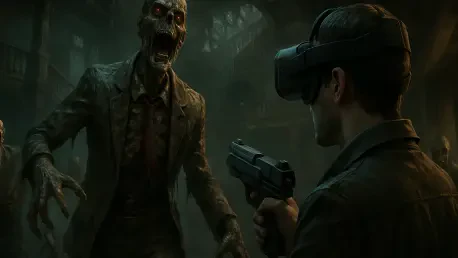
Inside the digital environment, the experience is powered by the latest iteration of Unreal Engine 5, which provides the high-fidelity textures and complex lighting models necessary to make the supernatural hordes feel genuinely threatening. Players are thrust into three distinct missions that require quick reflexes and strategic cooperation, as the game supports both solo play and a dedicated two-player cooperative mode. The use of commercial-grade VR headsets ensures that the field of view is wide and the resolution is sharp enough to prevent the motion sickness often associated with lower-end consumer devices. Each mission is crafted to escalate in intensity, utilizing spatial audio and environmental triggers to keep participants constantly off-balance. By leveraging these advanced rendering techniques, the attraction successfully translates the chaotic energy of the original light-gun games into a modern sensory assault that satisfies both veteran fans and newcomers. This results in an incredibly polished and smooth experience.
Engineering for Operational Excellence
Hardware Reliability: Armored Cable Solutions
A major hurdle for location-based virtual reality has always been the physical vulnerability of the equipment, particularly the connection cables that often succumb to the rigors of heavy daily use. To solve this, the development team collaborated with hardware manufacturer DPVR to engineer a specialized, armored headset cable harness designed to withstand substantial physical stress. This reinforced system is capable of withstanding up to 286 pounds of tension, directly addressing the primary cause of downtime in high-traffic arcade environments. By creating a hardware solution that prioritizes industrial-grade durability, the manufacturer has significantly lowered the long-term maintenance costs for venue operators. This focus on ruggedness allows the attraction to operate in a wide variety of locations, from family entertainment centers to adult-oriented barcades, without the constant fear of equipment failure during peak business hours. Consequently, the operational lifespan of the headset is extended.
Future Considerations: Scaling the Experience
The global debut of this new attraction served as a definitive signal that the out-of-home entertainment sector was ready to reclaim its leadership position through specialized hardware. Operators who prioritized early adoption found that the blend of nostalgic branding and modern reliability provided a distinct competitive advantage over standard digital offerings. Moving forward, the success of this project suggested that the future of the industry lay in creating experiences that were impossible to replicate in a home environment. Investors and facility managers were encouraged to look toward modular VR solutions that integrated physical feedback and communal viewing areas to maximize spatial efficiency. By focusing on high-retention mechanics and lowering the barriers to entry for casual players, the initiative demonstrated that classic intellectual properties could thrive when paired with thoughtful engineering. Ultimately, the integration of durable hardware and automated software provided a clear roadmap for future growth.