
The boundary separating professional cinematography gear from the modern smartphone has effectively dissolved with the arrival of the Vivo X500 Pro Max. While the industry previously prioritized slim profiles, this device signals a return to hardware-first design. The move from the X300 Ultra to a more robust Pro Max tier reflects a market maturing toward specialized tools rather than general-purpose gadgets. It targets a niche where tactile precision outweighs pure software automation.
Redefining Professional Photography in the Smartphone Era
This flagship bridges the gap between pocketable tech and dedicated cameras by prioritizing tactile hardware. It challenges the dominance of purely computational photography, which often strips images of their natural texture. This shift empowers users to reclaim manual control, moving away from automated processing toward intentional artistic choices.
Technical Excellence and Hardware Integration
The integration of specialized optics with high-speed silicon defines the current flagship experience. By focusing on raw data capture rather than just post-processing, the device maintains image integrity across various lighting conditions. This approach ensures that the hardware remains the primary driver of quality.
Advanced Triple-Camera System and LOFIC Technology
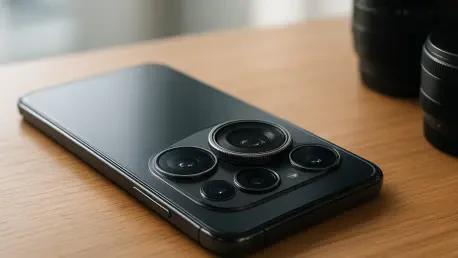
The 50MP Sony main sensor utilizes LOFIC technology to prevent highlight clipping in high-contrast scenes. By managing lateral overflow at the capacitor level, the hardware achieves professional dynamic range. This is paired with a 200MP telephoto lens and an IMX8-series ultra-wide sensor for versatile capture.
Tactile Control via the Physical Rotating Ring
The mechanical rotating ring encircling the camera island provides haptic feedback that digital sliders cannot replicate. This allows photographers to adjust ISO or aperture by feel, marking a significant pivot toward hardware-centric interfaces. Such innovation prioritizes the physical experience of mobile photography over screen-only interactions.
High-Performance Display and Next-Gen Processing
A 6.85-inch LTPO display at 144Hz ensures that viewfinder latency is nearly imperceptible to the human eye. The Dimensity 9600 chipset processes massive data streams from the high-resolution sensors without thermal throttling. This synergy is essential for real-time HDR previewing and rapid image processing.
Emerging Trends in Mobile Imaging Hardware
The industry is moving toward massive sensor footprints and specialized optics to justify premium flagship status. Standard release cycles now include “Ultra” specifications as a baseline for high-end users. Consumers increasingly demand authentic optical depth over software-simulated effects, driving manufacturers toward larger physical glass.
Practical Applications for Content Creators and Professionals
For street photographers, manual controls offer a level of agency previously reserved for mirrorless systems. High-end mobile cinematography also benefits from improved thermal management during long 8K recordings. Professionals find the telephoto capabilities indispensable for capturing detail at distances without the typical loss of clarity.
Overcoming Hurdles in Mobile Form Factors
The camera module creates ergonomic challenges, making the device top-heavy during extended use. Powering high-refresh displays alongside massive sensors puts immense strain on battery longevity and efficiency. Additionally, the mechanical rotating ring introduces durability concerns that require rigorous engineering to overcome long-term wear.
The Future of Professional Mobile Optics
The convergence of mirrorless features into smartphones will likely accelerate from 2026 to 2028. AI will transition from fixing errors to augmenting high-quality hardware output for more realistic results. Vivo’s strategy will force the global market to reconsider hardware limitations in the face of rising user expectations.
Final Assessment of the Vivo X500 Pro Max
The device effectively reset expectations for mobile imaging by proving that hardware innovation could disrupt a software-saturated market. Developers and creators needed to adapt to these high-fidelity tools to remain competitive in a visually demanding landscape. The industry moved toward a future where the device in a pocket was comparable to professional gear.