
The Aqara Smart Lock U200 leverages Apple HomeKey technology and facial recognition to provide a completely hands-free entry experience for mobile device users. This shift toward biometric and proximity-based entry marks the culmination of a decade-long evolution in home security, where the traditional mechanical key has become a secondary backup rather than a primary tool. In 2026, the smart lock is no longer viewed as a peripheral gadget for tech enthusiasts but as a fundamental component of the modern household’s security infrastructure. These devices have reached a level of sophistication where they blend seamlessly into the architectural aesthetic of a home while providing a level of oversight that was previously reserved for high-end commercial properties. The integration of advanced sensors and high-speed processing allows these locks to distinguish between residents, frequent guests, and potential intruders with remarkable precision, effectively turning the front door into an intelligent gatekeeper. As homeowners look to simplify their daily routines, the ability to grant access remotely, monitor arrivals in real-time, and eliminate the anxiety of misplaced keys has made the smart lock a non-negotiable upgrade for any contemporary residence.
The widespread adoption of these systems is also driven by the increasing reliability of the underlying hardware and the maturation of the smart home ecosystem. Modern units are designed to withstand extreme environmental conditions while maintaining the physical integrity of a Grade 1 or Grade 2 deadbolt chassis, ensuring that digital convenience does not come at the expense of mechanical strength. Beyond the physical lock, the software powering these systems has become more intuitive, offering granular control over who can enter and when. Homeowners can now manage complex schedules for domestic staff, provide one-time entry codes for deliveries, and receive instant notifications on their wearable devices the moment a door is engaged. This comprehensive approach to entryway management reflects a broader trend in residential technology toward proactive security, where the goal is not just to prevent unauthorized entry but to provide a complete, data-driven narrative of the home’s activity throughout the day. Consequently, selecting the right smart lock involves a careful evaluation of how the device fits into the specific rhythms of the household and the existing digital environment of the property.
Technological Advancements: The Biometric Revolution
One of the most significant shifts in the current market is the absolute ubiquity and refinement of biometric authentication as the primary method of home entry. Fingerprint scanners, which once struggled with wet or cold hands, have been replaced by high-resolution capacitive sensors and optical scanners that provide near-instantaneous recognition under almost any conditions. The most advanced models now utilize deep-learning algorithms to map the unique ridges and valleys of a fingerprint with such detail that the possibility of a false positive is virtually non-existent. However, the true innovation lies in the move toward multi-modal biometrics, where a single device can verify an individual through multiple biological markers simultaneously. This approach significantly raises the security bar, as it prevents common spoofing techniques and ensures that only the authorized person can gain entry. By prioritizing these biological keys, manufacturers have successfully removed the friction of remembering PIN codes or carrying physical fobs, making the act of entering one’s home as natural as a glance or a touch.
Building on the success of fingerprint technology, 2026 has seen the mainstreaming of facial recognition and palm-vein scanning in residential hardware. These systems utilize binocular depth-sensing cameras that can distinguish between a three-dimensional human face and a high-resolution photograph or video, effectively neutralizing the most common risks associated with early facial recognition software. Palm-vein scanning has emerged as a particularly secure alternative, as it maps the unique pattern of veins beneath the skin, a feature that is nearly impossible to replicate or forge. These biometric methods are often paired with proximity sensors that wake the lock as a user approaches, creating a fluid “walk-up” experience where the door unlocks before the handle is even turned. This level of automation is particularly beneficial for those carrying groceries or managing young children, as it eliminates the need to fumble for a phone or a keypad in the dark. The integration of these advanced biological sensors represents the peak of convenience in the modern era, ensuring that the human body itself serves as the most secure and reliable credential available.
The reliability of these biometric systems is further enhanced by robust anti-spoofing protocols and edge-based processing, which ensure that sensitive biological data never leaves the device. By processing the biometric signature locally on an encrypted chip within the lock itself, manufacturers have addressed one of the most significant privacy concerns of the digital age. This decentralized approach means that even if a home’s central network is compromised, the data required to unlock the door remains secure and inaccessible to outside actors. Furthermore, the speed of these local processors has reached a point where the latency between a scan and the mechanical movement of the deadbolt is imperceptible to the user. This immediate response time is crucial for maintaining the sense of seamlessness that modern consumers expect from high-end technology. As these biometric sensors continue to decrease in cost and physical size, they are being integrated into a wider variety of lock styles, from minimalist deadbolts to full-handle sets, allowing homeowners to enjoy top-tier security without compromising their personal design preferences.
Interoperability Standards: The Impact of Matter and Thread
The introduction and subsequent dominance of the Matter protocol have fundamentally reshaped the landscape of home automation by providing a universal language for all connected devices. In the years leading up to 2026, the smart home market was often fragmented into competing ecosystems, forcing consumers to choose between platforms like Apple Home, Google Home, or Amazon Alexa. Today, Matter serves as the bridge that allows a smart lock from one manufacturer to communicate perfectly with a security system or lighting array from another, regardless of the underlying platform. This interoperability ensures that a smart lock is no longer a siloed device but a central trigger for sophisticated home automation routines. For example, unlocking the front door can now simultaneously disarm the security system, adjust the smart thermostat to a preferred temperature, and activate entry lighting, all through a single, unified command structure that works reliably across every major smart home application.
Complementing the Matter standard is the widespread adoption of Thread, a low-power, self-healing mesh networking protocol that has become the preferred connectivity method for battery-operated devices. Unlike traditional Wi-Fi, which can be power-hungry and prone to congestion, Thread allows smart locks to maintain a constant, high-speed connection while consuming a fraction of the energy. Because Thread devices can communicate with each other to extend the range of the network, homeowners no longer need to worry about dead spots or the need for proprietary bridges and hubs. This mesh capability ensures that even a lock located on a distant garage door remains as responsive as the one on the main entrance. For the consumer, this translates to significantly longer battery life, often extending the interval between charges or battery replacements to well over a year. The combination of Matter for logic and Thread for connectivity has created a more stable and resilient smart home environment, where the reliability of a digital lock finally matches that of its mechanical predecessor.
This technological shift also provides a layer of future-proofing that was previously unavailable to early adopters of smart home technology. Because Matter is an evolving standard supported by the entire industry, homeowners can invest in high-quality hardware with the confidence that it will remain compatible with future devices and platforms for years to come. This has led to a significant increase in the longevity of smart locks, as they are no longer dependent on a single company’s cloud service or mobile app to function. Furthermore, the use of Thread border routers, often integrated into common household items like smart speakers or mesh Wi-Fi nodes, has simplified the setup process to a few taps on a smartphone. The reduction in technical friction has opened the market to a much broader demographic, allowing individuals who may not be technically inclined to enjoy the benefits of a fully connected and secure entryway. By removing the barriers of complex configuration and ecosystem lock-in, Matter and Thread have established a new baseline for what a professional-grade smart lock must provide in 2026.
Strategic Market Leaders: Analyzing Flagship Performance
In the current market, the Ultraloq Bolt Fingerprint has maintained its position as a dominant force by offering a balanced combination of versatility, reliability, and value. Its success is largely attributed to its “all-in-one” design philosophy, which includes a high-speed fingerprint scanner, a traditional keypad, and a hidden physical keyway for emergency access. By integrating Wi-Fi directly into the unit, it eliminates the need for additional hardware, making it an attractive option for those seeking a straightforward installation process. The device’s ability to store hundreds of unique fingerprints and PIN codes makes it particularly well-suited for large households or properties that utilize short-term rentals. Its longevity in the market is a testament to its robust construction and the manufacturer’s commitment to consistent firmware updates, which have kept the device relevant even as newer protocols have emerged. For the average homeowner, the Ultraloq represents a gold standard of practical security, providing multiple layers of redundancy that ensure entry is always possible, regardless of technical glitches.
While the Ultraloq caters to the broad middle market, brands like Lockly have carved out a niche for high-security enthusiasts by integrating advanced surveillance features directly into the locking mechanism. The Lockly Visage, for instance, represents the cutting edge of this multifunctional approach by combining a 3D biometric sensor with a built-in video doorbell. This integration allows the lock to function as a complete security portal, capturing high-definition video of anyone who approaches the door and allowing for two-way communication through a smartphone app. One of its standout features is the use of a rotating digital keypad, which periodically reshuffles the position of the numbers to prevent observers from guessing a PIN based on finger placement or smudge patterns. This focus on physical and digital obfuscation makes it a preferred choice for those living in high-traffic urban environments where privacy is a paramount concern. By consolidating several security functions into a single piece of hardware, these premium models offer a streamlined look that belies their internal complexity.
In contrast to the feature-heavy approach of some manufacturers, companies like Yale and Eufy have focused on refining the user experience through elegant industrial design and deep integration with existing home security suites. These brands emphasize the “quiet” aspects of smart technology, such as the noise level of the motor during operation and the tactile feel of the buttons or touchscreens. Their products often feature a more minimalist aesthetic that complements modern architectural styles, avoiding the bulky, overtly “techy” appearance of early smart locks. Eufy, in particular, has gained traction by offering a no-subscription model for its video-enabled locks, allowing users to store footage locally rather than relying on a recurring monthly fee. This commitment to transparency and user control has resonated with a consumer base that is increasingly wary of the long-term costs and privacy implications of cloud-based security services. By focusing on the intersection of design, privacy, and ease of use, these market leaders have ensured that smart locks are viewed as a sophisticated enhancement to the home rather than an intrusive complication.
User Experience: Innovations in Hands-Free Entry
The pinnacle of convenience in 2026 is the hands-free entry experience, which has moved from a specialty feature to a standard expectation for high-end smart locks. This technology is powered by Ultra-Wideband (UWB) chips that allow for precise spatial awareness, enabling the lock to detect the exact distance and direction of an authorized user. Unlike older Bluetooth-based geofencing, which could sometimes trigger “false unlocks” when a user was simply driving past their house, UWB-equipped locks only engage when the user is within a specific, narrow radius of the door. This precision ensures that the home remains secure while providing a magical “auto-unlock” sensation that feels both reliable and safe. For the mobile device user, this means that their iPhone or Android handset can remain in a pocket or bag, as the lock and phone conduct a secure, encrypted handshake the moment the user steps onto the porch.
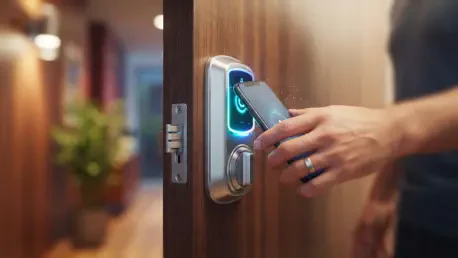
The integration of Apple HomeKey has also been a transformative factor for users within the iOS ecosystem, providing a level of hardware-level security that is difficult to match. With HomeKey, a digital credential is stored in the Secure Element of the iPhone or Apple Watch, allowing the user to simply tap their device against the lock to gain entry, much like using a contactless payment card. This feature is functional even if the mobile device has run out of battery, as a small reserve of power is typically maintained for transit and security passes. This “power reserve” capability effectively eliminates the fear of being locked out due to a dead phone, which was a common criticism of early digital locking systems. For homeowners, the ability to share these digital keys through a simple text message provides an unprecedented level of flexibility for managing guests or service providers, all while maintaining a permanent digital record of when each key was utilized.
Beyond the technical specifications, the psychological impact of hands-free entry has significantly changed how residents interact with their living spaces. The friction of the “doorstep ritual”—stopping to search for keys, putting down bags, and struggling with a lock in the dark—is being systematically removed from the daily routine. In its place is a more fluid transition between the public and private spheres, where the home anticipates the arrival of its occupants. This level of responsiveness is often supplemented by audible or haptic feedback, where the lock provides a gentle chime or a subtle vibration to confirm that the door is secured or open. By focusing on these sensory details, manufacturers have created an experience that feels premium and intentional. As this technology continues to proliferate, the traditional key is increasingly seen as a relic of a more cumbersome era, replaced by an invisible, intelligent system that prioritizes the user’s time and convenience.
Accommodating Modern Living: Retrofit and Minimalist Solutions
For a significant portion of the population, particularly apartment renters and those living in historic homes, replacing the entire deadbolt assembly is either prohibited or aesthetically undesirable. This has led to the continued popularity and refinement of retrofit smart locks, which are designed to be installed on the interior side of the door while leaving the existing exterior hardware completely intact. The August Wi-Fi Smart Lock remains a leader in this category, offering a sleek, circular housing that replaces the interior thumb-turn. This design allows the homeowner to continue using their original physical keys if they choose, providing a level of comfort for those who are not yet ready to fully commit to a keyless lifestyle. For renters, the primary advantage is the ease of installation and removal; the device can be set up in minutes with nothing more than a screwdriver and can be taken along to a new residence at the end of a lease without leaving any permanent marks or changes to the property.
While retrofit locks prioritize convenience and compliance, a new category of “invisible” smart locks has emerged for those who demand a completely clean aesthetic. The Level Lock Pro is the quintessential example of this philosophy, as it hides all of its electronic components, motor, and batteries entirely within the standard bore hole of the door. From both the outside and the inside, the device looks like a high-quality, traditional mechanical deadbolt, with no visible keypads or oversized battery compartments to signal that it is a smart device. This minimalist approach is ideal for design-conscious homeowners who want to maintain the architectural integrity of their entryway while enjoying modern features like Matter over Thread support and auto-unlock capabilities. By proving that high-tech security does not have to be visually intrusive, these invisible solutions have expanded the smart lock market to include traditionalists who might otherwise be put off by the “gadgetry” of standard smart hardware.
These discreet solutions also offer a strategic advantage in terms of security through obscurity. Because there is no external indication that the lock is smart, it does not draw unnecessary attention from potential intruders who might be looking for digital vulnerabilities. Furthermore, these locks often retain the use of a standard physical cylinder, allowing them to be part of a “master key” system for a multi-unit building or a large estate. This hybrid approach—traditional appearance with modern internal logic—represents a sophisticated middle ground in the industry. It acknowledges that the front door is not just a security point but a statement of personal style and a piece of historic or architectural property. As manufacturers continue to miniaturize the motors and battery technology required for these devices, we are seeing an even greater variety of finishes and styles, ensuring that every door, whether in a high-rise apartment or a suburban cottage, can be brought into the connected age without compromise.
Connectivity and Resilience: Power Management Strategies
A critical consideration for any smart lock user in 2026 is how the device manages its power and connectivity, especially during unexpected outages or hardware failures. Because these locks are independent, battery-powered units, they are inherently resilient to house-wide power outages that might disable other smart home components like cameras or thermostats. Most modern locks utilize a combination of long-lasting lithium batteries or rechargeable packs that provide months or even years of service. To mitigate the risk of a total power failure, the industry has standardized on proactive low-battery notifications, where the lock’s mobile app sends persistent alerts to the user’s phone and wearable devices well before the power reaches a critical level. Some models even include a physical “low battery” light on the interior housing or provide an audible warning each time the door is locked, ensuring that the need for maintenance is never a surprise.
For the rare occasions when the internal batteries do fail completely, manufacturers have introduced several creative emergency access solutions that eliminate the need for a locksmith. Many flagship models now feature external emergency power terminals, such as a 9V battery contact point or a hidden USB-C port, located on the underside of the exterior housing. This allows a homeowner to “jump-start” the lock by holding a common battery or a portable power bank against the terminals, providing just enough power to authenticate a biometric scan or enter a PIN code. This redundant power strategy has become a major selling point, as it addresses the most common fear associated with moving to a digital-only entry system. Additionally, almost every smart lock still includes a mechanical override in the form of a traditional keyway or a high-security dimple key, providing a final fail-safe for those who prefer the peace of mind that comes with a physical backup.
Connectivity resilience is equally important, particularly in an era where the home network is the backbone of daily life. While Wi-Fi is the primary method for remote control and integration, most smart locks are designed with a “local-first” architecture. This means that even if the home’s internet connection goes down, the lock will continue to function perfectly via Bluetooth or Thread for anyone within physical proximity of the door. The digital keys, biometric signatures, and PIN codes are stored locally on the device’s encrypted memory, ensuring that the ability to enter one’s home is never dependent on an active cloud server or a stable ISP. This focus on local autonomy is a direct response to the early criticisms of IoT technology, where a server outage could potentially leave users stranded outside their own homes. By prioritizing local resilience and redundant power, the smart lock industry has achieved a level of reliability that rivals, and in some cases exceeds, that of traditional mechanical systems.
Security Practices: Mitigating Digital and Physical Risks
As smart locks have become more integrated into the digital fabric of the home, the conversation around their security has expanded to include both physical and cybersecurity considerations. On the physical front, reputable manufacturers in 2026 continue to build their products on ANSI Grade 1 or Grade 2 deadbolt chassis, which are tested for their resistance to prying, drilling, and brute-force impacts. The inclusion of hardened steel bolts and reinforced strike plates ensures that the lock remains a formidable barrier against traditional break-in methods. Internally, the motors are designed with high-torque gear systems that can overcome slight door misalignments or weather-stripping resistance, preventing the “jamming” issues that plagued earlier generations of electronic locks. This marriage of robust mechanical engineering and sophisticated electronics creates a security solution that is greater than the sum of its parts, offering protection against a wider range of threats than a standard deadbolt.
In the digital realm, the industry has moved toward a “security-by-design” approach, where multi-factor authentication (MFA) and end-to-end encryption are standard features rather than optional settings. When a user interacts with their lock through a mobile app, the communication is shielded by the same level of encryption used by major financial institutions, making it extremely difficult for an attacker to intercept or “replay” an unlock command. Furthermore, most manufacturers now employ automatic firmware updates that are pushed to the devices over the air, allowing them to quickly patch any newly discovered vulnerabilities. This proactive stance on cybersecurity is supported by transparency features like detailed activity logs, which provide the homeowner with a real-time record of every successful and unsuccessful entry attempt. If an unrecognized device tries to access the lock or if an incorrect PIN is entered multiple times, the system can automatically trigger an alert and temporarily lock out the interface, providing an early warning of a potential breach.
A key part of maintaining this security posture is the user’s role in managing their own network and access permissions. Experts recommend that smart locks be placed on a dedicated “guest” Wi-Fi network or a secured Thread mesh to isolate them from other, potentially less secure IoT devices like smart toys or cheap appliances. Users are also encouraged to utilize the “expiring key” features of their software, which automatically revoke access for guests or service providers after a set period. This eliminates the “permanent key” problem, where a former tenant or employee might still have a working copy of a physical key years after their relationship with the homeowner has ended. By combining these digital best practices with the inherent physical strength of the hardware, the modern smart lock provides a comprehensive security solution that is tailored to the complexities of life in 2026. This dual-layered protection gives homeowners the confidence to embrace the convenience of a connected entryway without feeling exposed to unnecessary risk.
Strategic Oversight: Managing Guest and Service Access
The ability to manage entryway access with granular precision has revolutionized the way homeowners interact with service providers and the broader gig economy. In 2026, the use of temporary digital keys and one-time PINs has become the standard method for facilitating deliveries, home cleanings, and maintenance visits without the need for the homeowner to be physically present. These digital credentials can be programmed to work only during specific windows of time, such as between 10:00 AM and 2:00 PM on a Tuesday, and they automatically deactivate as soon as the scheduled task is complete. This level of control provides a significant upgrade over the traditional method of hiding a physical key under a doormat or sharing a static code that is never changed. For the modern professional, this flexibility means that a delivery person can be granted access to a secure foyer or a garage to drop off a package, protecting it from both weather and theft, while the main living areas of the home remain locked and secure.
This logistical convenience is further enhanced by “DoorSense” technology and advanced proximity sensors that provide visual and data confirmation of the door’s status. Unlike a simple lock that only reports if the bolt is thrown, DoorSense utilizes magnetic sensors to detect if the door is actually closed and latched within the frame. This prevents the common security lapse where a smart lock reports it is “locked” even though the door is standing wide open because it failed to latch properly. In the app, the homeowner can see a clear status indicator for both the lock and the door itself, providing absolute certainty that the home is secure before they go to sleep or leave for a trip. Some systems even include an “auto-relock” timer that can be customized to engage the deadbolt a few seconds after the door is closed, ensuring that the property is never left vulnerable due to a simple oversight or a distracted child.
The digital paper trail created by these systems also serves as an important tool for accountability and peace of mind. Every time a guest or service worker uses their assigned code, the homeowner receives a notification indicating exactly who has entered the property. This activity log can be reviewed at any time, allowing for a historical look at entry patterns or for verifying that a service was performed at the agreed-upon time. In many cases, these logs are paired with short video clips if the lock is integrated with a doorbell camera, providing a visual record to match the digital data. This transparency fosters a greater sense of trust between homeowners and those they invite into their private spaces, as the rules of access are clearly defined and strictly enforced by the technology itself. As a result, the front door has evolved into a sophisticated management portal that facilitates the complex logistical needs of contemporary life while maintaining a rigid security perimeter.
Aesthetic Harmony: Design Trends in Modern Hardware
The physical appearance of smart locks has undergone a dramatic transformation as manufacturers have prioritized architectural harmony and high-quality materials. In the current market, the bulky, plastic-heavy designs of the past have been replaced by slim profiles and premium finishes like satin nickel, matte black, and oil-rubbed bronze. These materials are chosen not only for their durability but for their ability to blend in with the existing door hardware of a wide variety of home styles, from ultra-modern glass-and-steel constructions to more traditional colonial or craftsman designs. The touchscreens and keypads are often integrated into the metal housing with a high degree of precision, featuring edge-to-edge glass and haptic buttons that disappear when not in use. This “stealth” design philosophy ensures that the smart lock does not dominate the entryway’s aesthetic but rather enhances it as a high-quality piece of functional hardware.
Innovation in motor technology has also allowed for a significant reduction in the size of the interior housing, which was previously a point of contention for many design-conscious users. Modern smart locks utilize high-density battery packs and compact, high-torque motors that allow the interior side of the door to remain nearly as slim as a traditional thumb-turn assembly. This reduction in footprint is often accompanied by a focus on “silent operation,” where the sound of the deadbolt engaging is minimized through the use of precision-engineered gears and sound-dampening materials. This attention to detail reflects a broader trend in the industry toward “calm technology,” where the benefits of automation are provided without the intrusive noise or visual clutter that often accompanies high-tech gadgets. For the homeowner, this means that their front door remains a welcoming and beautiful part of their home’s facade, even as it performs complex security functions in the background.
Furthermore, the durability of these designs has been tested against the increasingly volatile weather patterns seen in the mid-2020s. High-quality smart locks are now rated with specific IP (Ingress Protection) codes that guarantee their resistance to heavy rain, blowing snow, and extreme temperature fluctuations. The finishes are treated with UV-resistant coatings to prevent fading or peeling under intense sun exposure, ensuring that the device looks as good in five years as it did on the day of installation. By focusing on both form and function, manufacturers have successfully moved the smart lock into the category of “architectural hardware,” a distinction that is important for maintaining property value and curb appeal. As more homeowners view their security systems as a long-term investment in their property, the demand for hardware that is both technically capable and aesthetically timeless continues to grow, driving the industry toward even higher standards of design excellence.
Strategic Future-Proofing: Building a Secure Foundation
The evolution of home entry systems by 2026 reached a point where the distinction between physical security and digital convenience completely dissolved. Homeowners who prioritized a balanced approach to their security infrastructure successfully avoided the pitfalls of early-generation technology by selecting devices that offered redundant access methods and universal communication standards. The transition toward Matter and Thread protocols proved to be the most critical factor in ensuring long-term compatibility, as it allowed locks to remain functional and integrated even as individual smart home platforms evolved or were replaced. By focusing on these open standards, the modern household established a foundation that was resilient to the rapid shifts in the consumer electronics market, ensuring that their investment in high-quality hardware remained viable for many years. This strategic foresight transformed the front door from a static barrier into a dynamic, intelligent portal that responded to the unique needs of its occupants with precision and reliability.
Those who navigated the smart lock landscape effectively learned to value “redundant convenience” above all else, ensuring that their homes were accessible through biometrics, mobile devices, and physical keys alike. This multi-layered strategy mitigated the risks of technical failure and provided a level of accessibility that accommodated every member of the family, from tech-savvy teenagers to more traditional guests. The integration of advanced features like UWB spatial awareness and binocular facial recognition not only enhanced the user experience but also provided a sophisticated defense against modern intrusion techniques. Ultimately, the best smart locks were those that faded into the background of daily life, providing silent oversight and seamless entry while maintaining a robust physical defense. As home security continues to advance, the lessons learned from this era served as a blueprint for creating living spaces that were not only more secure but more intuitive and responsive to the human experience. Proper maintenance and a focus on local-first connectivity remained the final keys to a truly resilient and future-proofed connected home.