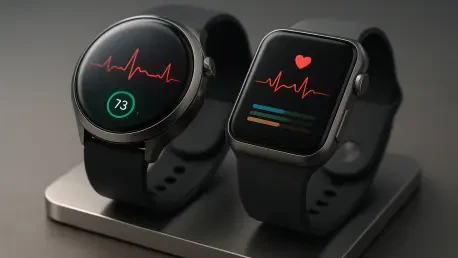

The Google Health Coach uses adaptive AI to create personalized workout plans based on biometric data, challenging Apple’s established Fitness+ ecosystem by offering a more automated and intelligent approach to daily exercise. This shift marks a pivotal moment in the wearable market, where hardware specifications now take a backseat to the sophisticated machine learning algorithms that interpret biological signals. As the industry moves deeper into this era of proactive assistance, the Pixel Watch 5 and Apple Watch Series 11 have emerged as the primary contenders for dominance. While previous generations focused on reactive notifications and basic activity tracking, these new models act as digital companions capable of predicting needs before they arise. The stakes are particularly high because these devices serve as primary gateways to their respective corporate ecosystems, influencing whether a consumer remains loyal to Android or iOS. Consequently, the choice between these two powerhouses is no longer just about aesthetics or brand affinity; it is about which artificial intelligence model provides the most meaningful impact on productivity and long-term health outcomes. Navigating this landscape requires a careful look at how each manufacturer balances advanced biometric monitoring with the practical realities of battery life, connectivity, and everyday wearability.
Platform Compatibility: The Great Ecosystem Wall
The fundamental barrier to entry for many potential buyers remains the strict software requirements imposed by manufacturers, which effectively divide the market into two distinct camps. The Apple Watch Series 11 continues the long-standing policy of exclusivity, functioning only when paired with an iPhone that supports the latest operating system updates. This restrictive approach ensures that the wearable can tap into a deeply integrated suite of services, such as iMessage, Apple Music, and advanced smart home controls, with zero latency or synchronization errors. However, this same policy completely alienates millions of users who prefer the flexibility of other hardware platforms or who simply do not wish to be locked into a single ecosystem for all their digital needs. For those already entrenched in the iOS world, the Series 11 represents a seamless extension of their mobile experience, but for anyone outside that perimeter, the device is essentially a high-tech tool that offers no cross-platform functionality. This rigid stance has become a defining characteristic of the brand strategy, forcing consumers to decide if the specific benefits of the Apple interface are worth the lack of hardware choice.
Google offers a slightly more flexible alternative with the Pixel Watch 5, although it still maintains certain preferences for its own hardware to ensure an optimal user experience. While the device is compatible with any modern smartphone running Android 12 or newer, the company clearly incentivizes the use of Pixel phones by reserving the most advanced Gemini features for its own ecosystem. This creates a tiered experience where users of third-party Android devices can access core health and notification functions but may miss out on the most responsive and deeply integrated AI automation. By maintaining compatibility with the broader Android landscape, Google manages to capture a much larger potential audience than its main rival, appealing to those who value the freedom to switch between different phone brands without losing their wearable data. Nevertheless, the subtle optimizations found when pairing a Pixel watch with a Pixel phone suggest that Google is moving toward a more cohesive integration model. This strategy attempts to strike a balance between open-source accessibility and the refined performance that comes from controlling both hardware and software on both ends of the connection.
Pricing Structures and Material Choices
Pricing has largely ceased to be a major point of differentiation, as both companies have aligned their costs to compete directly for the same high-end consumer demographic. Both base models start at approximately $400, with incremental increases for larger casing sizes or the inclusion of cellular data capabilities. Even the upgrade to independent connectivity is standardized, with both brands requiring a consistent premium for the internal modem and antenna systems. This parity suggests that the market has reached a state of maturity where the perceived value of a flagship smartwatch is firmly established around this price point. Consumers no longer need to worry about being priced out of one brand over the other, as the financial commitment remains nearly identical regardless of the chosen operating system. This shift allows the conversation to move away from budget considerations and toward the actual utility and performance of the devices. The competitive pricing strategy ensures that neither company loses market share based solely on the initial purchase price, focusing the competition on long-term value and software features.
Despite the similarity in base pricing, Apple maintains a significant lead in providing a variety of premium materials for users who view their smartwatch as a fashion statement or a luxury item. They offer a high-end titanium version that commands a substantial extra cost, catering to individuals who demand superior durability and a more refined aesthetic. Google, by contrast, has opted for a streamlined, single-material approach that emphasizes consistency across the entire product lineup. While the Google design is undeniably elegant, it lacks the specialized options that allow for the high level of personalization found in the Apple catalog. This difference in philosophy highlights two different ways of viewing the wearable market: one as a tool for mass-market utility and the other as a customizable accessory that bridges the gap between technology and jewelry. For the average user, the standard aluminum or stainless steel finishes provided by both brands are more than sufficient, but those looking for a specific high-performance material like titanium will find only one of these manufacturers currently meeting that specific demand.
Internal Architecture: Dual Processors and Connectivity
The internal performance of these watches is driven by two very different approaches to mobile computing and energy management. The Pixel Watch 5 utilizes a sophisticated dual-processor architecture specifically designed to manage the high computational demands of generative AI without sacrificing efficiency. One processor handles the complex tasks associated with Gemini Intelligence, while a secondary low-power co-processor manages background sensors and the always-on display. This division of labor allows the watch to remain responsive during heavy use while preserving battery life during periods of relative inactivity. Apple, meanwhile, has introduced the S10 chip, which focuses on raw speed and seamless integration with the existing software stack. The S10 provides a remarkably fluid interface where apps open instantly and transitions occur without a hint of lag. This evolution of their silicon technology ensures that the Series 11 remains the gold standard for interface performance, even as the software becomes more demanding. Both devices represent the pinnacle of modern micro-engineering, though they prioritize different aspects of the user experience through their respective chip designs.
Connectivity represents one of the most practical areas of divergence between the two flagship models, impacting how users interact with the world around them. Apple has integrated 5G support into the Series 11, providing significantly faster data transfer speeds for users who frequently use their watch away from their phone or Wi-Fi networks. This makes streaming music or downloading large updates much more efficient, though it does place additional strain on the battery. Google has taken a different route by sticking with LTE for standard data but including satellite connectivity for emergency situations. This feature allows users to send distress signals or share their location even when they are far outside the range of traditional cellular towers. While Apple reserves similar technology for its more rugged, expensive models, Google has made it a standard inclusion for the Pixel Watch 5. This makes the Google offering a more compelling choice for outdoor enthusiasts or individuals who frequently travel through remote areas where reliable cell service is not guaranteed. The choice between faster daily data and emergency resilience is one of the most significant trade-offs between these two platforms.
Aesthetics and Visual Display Quality
The physical design of these wearables reflects two distinct visions for the future of the smartwatch form factor. Apple continues to refine its iconic rectangular frame, a design that has become synonymous with the brand over the past several years. The rectangular shape is inherently more efficient for displaying text and navigating through lists, as it provides more screen real estate for vertical content than a circular face. The Series 11 is also remarkably thin, reducing the profile of the device so that it sits closer to the wrist and fits easily under a variety of clothing styles. This focus on a slim, unobtrusive build makes the watch comfortable for all-day wear and prevents it from feeling bulky during vigorous physical activity. For many users, the rectangular design is a functional choice that prioritizes information density and ergonomics over traditional watch aesthetics. It serves as a clear signal that the device is a modern computer first and a timepiece second, embracing its digital nature with a clean, industrial look.
Google has chosen to go in the opposite direction, adhering to a classic circular design that mimics the appearance of a traditional analog watch. The domed glass and rounded edges of the Pixel Watch 5 create a soft, organic look that appeals to those who prefer their technology to blend in with traditional fashion. While this design is visually striking and elegant, the circular screen does result in some wasted space at the corners, making it slightly less efficient for reading long messages or complex data sets. Additionally, the Pixel Watch 5 is noticeably thicker than the Apple alternative, which may be a point of contention for users with smaller wrists or those who prefer a more flush fit. Both manufacturers have equipped their devices with exceptionally bright displays that can reach high nit levels, ensuring that the screen remains perfectly legible even in direct sunlight. Apple adds a specialized scratch-resistant coating to its higher-end models for added protection, while Google relies on its unique glass curvature to provide a distinctive visual identity. The decision between these two styles often comes down to whether a user prefers the utilitarian efficiency of a rectangle or the timeless appeal of a circle.
Energy Efficiency and Battery Management
For years, the most persistent complaint regarding smartwatches has been the need for daily charging, but this generation has seen major strides in power efficiency. Apple has finally addressed this limitation with the Series 11, boosting its official battery estimate to 24 hours of standard use. In practical, real-world testing, the larger version of the watch can often stretch toward two full days of operation if the more power-hungry features are managed conservatively. This improvement is a welcome change for the Apple faithful, as it reduces the anxiety of the watch dying before the end of a long day or during an overnight trip. The faster charging speeds also mean that even a short period on the charger can provide enough power for several hours of use, making the daily routine much less of a burden than it was in previous years. While Apple still trails some of its competitors in raw endurance, the progress made with the Series 11 brings it much closer to the expectations of the modern consumer who demands more than a single day of uptime.
Despite the improvements made by its competitor, Google maintains a clear advantage in the realm of battery longevity for this current hardware cycle. The Pixel Watch 5 is engineered to last between 30 and 40 hours on a single charge under normal conditions, and the larger model can easily push toward 60 hours even with the always-on display active. This extended battery life makes the Google wearable the superior choice for users who are serious about sleep tracking, as it can comfortably survive multiple nights without needing to visit the charging puck. The ability to go through a full weekend without worrying about power is a significant quality-of-life benefit that sets the Pixel Watch 5 apart from nearly every other mainstream smartwatch. Google’s power management software is highly aggressive in optimizing background processes, ensuring that every milliampere-hour is used as effectively as possible. For individuals who find the daily charging cycle to be a deal-breaker, the endurance of the Pixel Watch 5 provides a level of freedom that remains unmatched by the Apple Series 11 at this stage of development.
AI Assistants and Clinical Wellness Features
Artificial intelligence is the centerpiece of both devices, yet the implementation of this technology differs based on the core philosophy of each company. Google’s Gemini Intelligence is designed to be a proactive assistant that learns from user habits and provides information before it is explicitly requested. For example, the watch might automatically display public transit schedules or flight details based on the user’s location and calendar without any manual input. This level of predictive automation makes the Pixel Watch 5 feel like an extension of the user’s cognitive process, streamlining daily tasks with minimal friction. In contrast, Apple has focused on making Siri more contextual and personalized, utilizing a massive library of third-party app integrations to expand the watch’s utility. While Siri may not be as predictive as Gemini, the vast ecosystem of apps available on watchOS allows the Series 11 to perform a wider variety of specific tasks tailored to the user’s professional or creative life. Both AI models represent a massive leap forward from the simple voice commands of the past, transforming the watch into a truly intelligent hub.
The transition toward medical-grade health monitoring has accelerated this year, with both watches introducing sensors that were once reserved for specialized clinical equipment. Google has introduced a suite of innovative features, including the ability to track markers of insulin resistance and provide emergency breathing alerts if blood oxygen levels drop dangerously low during sleep. These features position the Pixel Watch 5 as a vital tool for preventative health, offering insights that could potentially save lives or alert users to chronic conditions before they become critical. Apple has countered these developments by introducing hypertension monitoring, which uses advanced algorithms to detect signs of high blood pressure over time. Furthermore, Apple’s Fitness+ service remains a dominant force in the market, providing a huge variety of guided workouts that integrate seamlessly with the watch’s sensors to provide real-time performance metrics. While Google’s Health Coach offers a more automated approach to exercise planning, Apple’s ecosystem provides a more curated, human-led fitness experience. Both devices have effectively moved beyond simple step counting to become comprehensive wellness monitors capable of providing high-level health data.
Strategic Market Evolution: The New Wearable Paradigm
The comparative study of these two flagship wearables demonstrated that the technological gap between the industry leaders had narrowed to its smallest margin yet. It was no longer a question of whether one watch was objectively better than the other, but rather which device aligned more closely with a user’s specific digital habits. Those who prioritized high-speed cellular connectivity and a slim, rectangular design found that the Apple Watch Series 11 met their needs with unmatched precision. Conversely, users who valued extreme battery life and the security of satellite communication were better served by the Pixel Watch 5. It became evident that the success of these devices was tied directly to the intelligence of their software, as both Gemini and Siri evolved into proactive partners rather than just passive interfaces. The data showed that the market had shifted from a focus on hardware aesthetics to a focus on the utility of artificial intelligence in managing daily health and productivity.
Moving forward, potential buyers should evaluate their current hardware ecosystem before making a final decision, as the integration benefits of staying within a single brand’s family remained significant. For those seeking the best overall value, the actionable next step involved identifying which specific health metrics, such as hypertension or insulin resistance tracking, were most relevant to their personal wellness goals. It was also advisable to consider the long-term support cycles of each brand, as the rapid pace of AI development required frequent software updates to maintain peak performance. The industry appeared to be moving toward a future where the smartwatch was the central node for personal data, making privacy and data security even more critical than before. Consumers who took the time to understand the nuances of each AI model were able to select a device that did more than just tell time; they gained a sophisticated tool for navigating an increasingly complex digital and physical world. The competition between Google and Apple ultimately benefitted the user, as both companies were forced to innovate at a scale that redefined the boundaries of wearable technology.