
Consumers who prioritize multi-week endurance often turn to the Amazfit Balance 2 XT, which maintains a charge for up to twenty-one days even under heavy sensor loads. This capability marks a definitive shift from the era when wearable technology was viewed as a peripheral extension of a smartphone, rather than a standalone health instrument. Modern users demand a high degree of reliability across a diverse spectrum of specialized metrics, moving past generalities to seek specific performance outcomes. The transition has been driven by a collective realization that smartwatches are no longer just luxury accessories; they have become vital tools for health management and high-performance athletic training. However, a common myth persists that all smartwatches are inherently precise, when the reality is that data fidelity varies wildly between brands. To navigate this landscape, one must synthesize real-world user experiences with technical benchmarks to identify which devices actually deliver on their promises of accuracy and durability in the current year.
Maximizing Endurance and Specialized Performance
Longevity: Charging Efficiency and Power Management
The primary pillar of reliability for many users remains battery performance, as the frustration of daily charging often leads to abandoned devices. The Amazfit Balance 2 XT addresses this “charging anxiety” by providing a staggering potential for twenty-one days of operation on a single cycle. Priced at approximately $300, it occupies a competitive middle ground, offering an affordable alternative to premium flagship models while significantly outperforming many of them in terms of pure endurance. User consensus suggests that even under the heavy load of continuous heart rate monitoring and blood oxygen saturation tracking, the device maintains its charge far longer than its immediate competitors. This reliability in power management makes it a standout for consumers who prioritize consistency and low-maintenance operation over brand prestige. By removing the need for frequent tethering to a power outlet, the device ensures that health data collection remains uninterrupted, providing a more complete picture of the wearer’s status.
Beyond the sheer number of days between charges, the reliability of the power delivery system itself determines the device’s long-term utility. Consistent power output is necessary to ensure that sensors operate within their intended parameters, as low battery levels can sometimes lead to intermittent data gaps or reduced polling rates. Users who engage in long-distance hiking or multi-day excursions find that this extended battery life is not merely a convenience but a safety feature. The ability to trust that a watch will not fail mid-route allows for a greater focus on the activity itself rather than on managing power settings. Furthermore, the integration of efficient power-management software prevents the common pitfall of rapid battery degradation over several years of use. This long-term hardware reliability ensures that the initial investment continues to provide value well into the future, cementing the device’s reputation as a dependable companion for those who demand constant connectivity and monitoring without the typical limitations.
Aquatic Performance: Sensor Accuracy and Water Resistance
In the specialized niche of aquatic sports, the Huawei Band 10 has established a reputation for excellence that contradicts its modest $69 price point. Swimming presents unique challenges for wearable sensors, as water can interfere with motion detection and heart rate optics, leading to inaccurate lap counts or misinterpreted stroke types. Despite these physical obstacles, the Band 10 provides roughly 95% accuracy in stroke recognition, a figure that rivals much more expensive equipment. This precision is particularly notable because users are often hesitant to take high-end electronics into chlorinated pools or salt-heavy open-water environments. The Band 10 mitigates this financial risk while providing high-quality data that athletes can use to refine their technique and monitor their cardiovascular efficiency during training. While specific regional availability may vary, the consensus among swimmers is that the device is a reliable companion for both pool-based drills and excursions into more demanding settings.
The reliability of aquatic tracking also extends to the physical sealing and pressure resistance of the hardware, which must withstand repeated submersions and the dynamic force of swimming strokes. Many devices claim water resistance, yet few maintain their sensor accuracy once submerged. The Huawei Band 10 utilizes advanced algorithms specifically calibrated for the drag and movement patterns associated with different swimming styles. This specialized software allows the device to filter out the noise caused by water contact, ensuring that every lap is accounted for and every heartbeat is recorded with minimal interference. For enthusiasts who transition between different environments, such as from an indoor lap pool to an open lake, the consistency of this performance is paramount. Reliable tracking in these conditions allows for a seamless integration of aquatic data into a broader fitness profile, enabling a holistic view of training loads. The ability to rely on a budget-friendly device highlights the current progress.
Mapping Progress and Clinical Health Tracking
Cardiovascular Precision: Diagnostic-Adjacent Heart Rate Tools
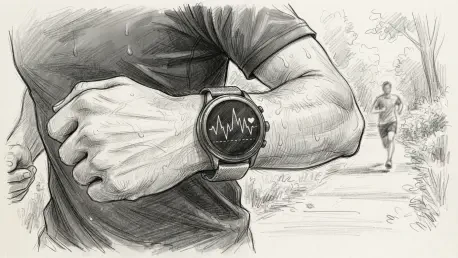
For those who view their smartwatch as a medical or high-performance fitness tool, heart rate accuracy is the ultimate metric of reliability. The Garmin Venu 3, priced at $450, is frequently cited as the gold standard in this category due to its sophisticated optical sensor array. The narrative surrounding this device is bolstered by numerous accounts of users comparing the watch’s readings to hospital-grade chest straps and finding them to be nearly identical. This level of precision is critical for individuals managing cardiac conditions or athletes performing high-intensity interval training, where staying within a specific heart rate zone is essential for safety and efficacy. The Garmin Venu 3’s ability to maintain accuracy during the physiological stress of a hard workout and the subsequent recovery period solidifies its position as a trusted diagnostic-adjacent tool. By providing data that users can trust without hesitation, the device removes the guesswork from health management, allowing for precise interventions.
Reliability in heart rate monitoring also involves the device’s ability to handle rapid fluctuations in intensity, a common failure point for lesser sensors. While many watches track resting heart rate with ease, they often struggle to keep up with the quick spikes and drops seen in sports like cross-training or sprinting. The Garmin Venu 3 excels here, utilizing a polling rate that captures these changes with clinical-like precision. This responsiveness ensures that the calculated calories burned, recovery times, and training readiness scores are based on accurate physiological data rather than generalized estimations. Furthermore, the inclusion of features like heart rate variability tracking adds a layer of depth to the user’s health profile, offering insights into the nervous system’s response to stress. This comprehensive approach to cardiac health monitoring transforms the watch from a simple fitness tracker into a sophisticated wellness monitor that provides a baseline for daily physical and mental performance.
Restorative Analysis: Sleep Science and Data Integrity
As global wellness trends shift toward recovery, sleep tracking has become a cornerstone of the modern smartwatch experience. The Apple Watch Series 11 is currently identified as a leader in this domain, retailing for approximately $430 and offering a deep integration of hardware and software. What sets this device apart is its philosophy regarding data transparency; unlike some manufacturers that provide a “black box” interpretation of sleep, Apple provides a sleep score derived from raw, high-fidelity data including respiratory rates and blood oxygen levels. This allows users to see a more authentic representation of their nightly rest cycles, identifying potential issues before they become chronic problems. The inclusion of FDA-cleared features like sleep apnea detection adds a layer of clinical reliability that transforms the watch from a passive tracker into a proactive health guardian. Users report that this consistent nightly monitoring provides actionable insights that lead to genuine improvements.
Potential buyers were encouraged to look past marketing claims and evaluate their specific needs before making a final selection in the wearable marketplace. The community of owners established that while hardware durability is important, the ultimate value of a smartwatch lies in its ability to provide actionable health insights without constant maintenance. For those who prioritized longevity, the Amazfit series proved to be the most viable solution, while athletes requiring clinical-level heart rate monitoring found their needs met by the Garmin ecosystem. Moving forward, the most effective strategy involved choosing a device that integrated seamlessly into daily routines without adding technical friction. As sensor technology evolved, the distinction between lifestyle gadgets and health tools became increasingly blurred, making informed selection more critical than ever. In the end, the most reliable wearable was the one that consistently provided accurate data, allowing users to make better decisions regarding their fitness, recovery, and well-being.