



Navigating the current mobile market often requires ignoring the seductive allure of the newest release cycles in favor of analyzing cold, hard hardware data from the previous year. As the current landscape matures, a surprising trend has emerged where the 2025 Motorola Razr lineup is positioned to be a more logical and high-value purchase than the newly debuting successors. This analysis explores a unique market anomaly where rising component costs and incremental hardware updates have turned last year’s flagship into next year’s best deal. By examining the intersection of pricing, performance, and timing, it becomes clear why the 2025 models offer a superior experience for a fraction of the cost.
Consumers are increasingly realizing that the “wait for the next model” philosophy is no longer a guaranteed win. The rapid pace of technological advancement has slowed, leading to a situation where the previous year’s top-tier devices are almost indistinguishable from the current generation in day-to-day use. Consequently, the decision to opt for a slightly older flagship is not about compromising on quality, but rather about making a sophisticated financial choice that prioritizes longevity and value over the vanity of owning the latest release number.
Industry Pressures: The Economic Forces Shaping the Foldable Market
Understanding the value of the 2025 Motorola Razr requires a look at the macro-economic pressures currently hitting the tech industry. For the past several years, the cost of advanced semiconductors, sophisticated LTPO foldable panels, and high-density batteries has risen steadily. These industry-wide price hikes mean that manufacturers face a difficult choice: significantly increase retail prices or “recycle” older technology to maintain their profit margins. This has created a landscape where the current generation of devices is more expensive without offering the revolutionary leaps in technology that consumers have come to expect.
Furthermore, the volatility of global supply chains has forced brands to stick with tried-and-true components rather than experimenting with unproven, expensive new hardware. This conservative approach to manufacturing has resulted in a plateau of performance. Because the 2025 Razr was developed during a period of peak hardware ambition, it contains premium components that are still being treated as cutting-edge in the current market cycle. Therefore, the price-to-performance ratio of the 2025 model remains unmatched by anything launched in the current fiscal year.
The Price Paradox: High Specifications for Lower Costs
Market Intelligence: Comparing the Flagship Value Proposition
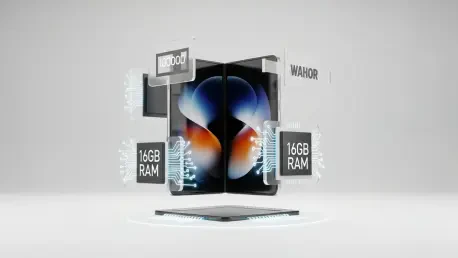
The Motorola Razr Ultra (2025) serves as the strongest evidence for choosing a previous-generation device. Market intelligence confirms that the current successor debuted at a staggering $1,499.99—a $200 increase over the 2025 model’s launch price. When the internal specifications are examined, the disparity becomes even more glaring. Reports indicate that the current model features the same Snapdragon 8 Elite processor and 16GB of RAM already found in the 2025 version. Choosing the 2025 model allows users to access “future-proof” performance today, avoiding the massive price premium attached to the current release cycle.
Moreover, the depreciation of the 2025 model has accelerated due to the arrival of new marketing campaigns, making it available at nearly half the cost of its successor. This creates a situation where a consumer can purchase a high-end foldable and a suite of accessories for the same price as just the new handset alone. Since the core internal architecture is identical, there is no discernible difference in how apps, games, or multitasking features operate between the two years of production.
Technical Superiority: Hardware Longevity and Display Excellence
One of the primary reasons the 2025 Razr Ultra remains relevant through the current year is its cutting-edge hardware. The device features a 7-inch foldable LTPO AMOLED main display with a 165Hz refresh rate, a spec that remains at the top of the industry even now. Furthermore, its 4-inch cover screen and high-resolution 50MP camera system rival what many competitors are planning for their upcoming product roadmaps. Because the current iteration kept these exact screen dimensions and resolutions, there is no “spec envy” to worry about; the 2025 hardware is already operating at the peak of what the current form factor can handle.
The durability of the 2025 hinge mechanism also set a high standard that has not been meaningfully surpassed. While newer models might claim minor improvements in fold visibility, the actual mechanical integrity of the 2025 series has proven itself through a year of real-world use. This established track record provides a level of peace of mind that new, unproven hardware cannot offer. In contrast, early adopters of the newest models are essentially acting as beta testers for minor engineering tweaks that do not fundamentally change the user experience.
Entry-Level Insights: Beyond the Ultra and Toward Budget Alternatives
The argument for 2025 hardware extends to the standard Motorola Razr as well. While the current budget model launched at $800 with minor tweaks, the 2025 version has frequently been seen at $699.99, often bundled with valuable extras like the Lenovo Idea Tab Pro. This creates a massive gap in total value. For the entry-level consumer, the 2025 Razr provides a 120Hz display and IP48 water resistance—features that make it a durable and modern choice. The marginal utility of a slightly newer chip in the current model simply cannot compete with the sheer volume of hardware provided in the 2025 bundles.
The standard model also benefits from a design language that has remained remarkably consistent. To the casual observer, the 2025 and 2026 “vanilla” models are indistinguishable, meaning that users do not lose any social or aesthetic currency by choosing the older version. When factoring in the free tablet or other ecosystem perks that often accompany 2025 clearances, the economic logic becomes undeniable. It is a rare moment where the entry-level device from last year offers a more premium “out-of-the-box” experience than the current year’s standalone offering.
Stagnant Innovation: Emerging Trends and the Technological Plateau
The mobile industry has reached a plateau where year-over-year improvements are increasingly incremental. A trend across the board—from Samsung to Motorola—has emerged where the “next big thing” is often just the “current thing” with a fresh coat of paint and a higher price tag. This stagnation in innovation, combined with rising manufacturing costs, means that the sweet spot for consumers has shifted. Industry experts observed that the current cycle is defined by “optimization” rather than “revolution,” making the high-performance chips of 2025, like the Snapdragon 8 Elite, more than capable of handling software demands for years to come.
Additionally, software support has become more standardized, with manufacturers offering multi-year update cycles. This means the 2025 Razr is still well within its primary update window, receiving the same AI-driven features and security patches as the newest models. When the software experience is identical, the hardware becomes a commodity, and the lowest price for that commodity wins. The industry is currently in a holding pattern while waiting for the next breakthrough in battery technology or flexible glass, which leaves the 2025 models sitting in a perfect position of relevance.
Investment Planning: Strategic Buying Recommendations for the Long Term
For consumers looking to maximize their investment, the takeaway is clear: prioritize the 2025 flagship while inventory remains available. To get the best results, shoppers should look for the 1TB storage configurations of the Razr Ultra, which are often priced lower than the 512GB versions of the current models. This double-storage benefit is perhaps the most practical reason to look back, as modern media and app sizes continue to grow. Additionally, keeping a close eye on retail deadlines is vital; as manufacturers prepare for newer seasonal launches, they often pull older stock to prevent it from outshining the new, more expensive units.
Acting before these seasonal transitions is the most effective way to secure a premium foldable experience without the premium tax. It is also wise to consider secondary market certifications; because the 2025 Razr was such a popular model, the refurbished and “open-box” market is currently flooded with high-quality units at even deeper discounts. For those who prioritize utility over the thrill of unboxing a brand-new unit, these options provide the highest possible return on investment. The focus should remain on securing the highest storage tier possible to ensure the device remains functional as digital storage needs expand.
The Final Verdict: Why the 2025 Razr Is the Definitive Choice
The market analysis indicated that the 2025 Motorola Razr lineup represented a rare moment where the previous generation was objectively the better buy for the long term. By locking in a 165Hz display, a top-tier processor, and massive storage capacity at a discounted price, consumers bypassed the price hikes and incrementalism of the current market. This shift in strategy—from chasing the newest release to securing the best value—proved to be the smartest way to navigate the evolving world of foldable technology. The 2025 Razr was not just a phone for its own time; it emerged as the most sensible choice for the current year and beyond.
Strategic buyers who moved early secured hardware that remained competitive even as newer, more expensive devices failed to offer significant upgrades. The decision to prioritize the 1TB storage variants and bundled offers maximized the functional life of the device, ensuring that users did not feel the need to upgrade again for several years. Ultimately, the 2025 Razr series demonstrated that technical excellence and economic value could coexist, provided that consumers were willing to look beyond the marketing hype of the newest release cycle. Those who followed this path successfully navigated a complex market and came out ahead both financially and technologically.







