
The volume of error reports on platforms like Downdetector surged rapidly on Monday morning as the outage expanded from European markets into the United States and Canada. This sudden surge signaled more than just a minor glitch; it revealed a deep vulnerability in the automated systems that millions of people rely on for daily tasks. From the early morning hours, users found themselves locked out of their own devices, unable to perform basic functions such as adjusting thermostats or checking security feeds. The rapid escalation of reports across various time zones suggested that the problem originated within the core cloud infrastructure, rather than being a localized networking issue. This event serves as a significant wake-up call, highlighting the fragility of a household ecosystem that depends entirely on remote servers. As the day progressed, the realization set in that convenience carries a hidden cost when these centralized systems fail suddenly.
Mapping the Global Reach and Core Symptoms
Geographical Impact: From Europe to Oceania
The disruption first gained significant momentum in the United Kingdom during the early morning hours, creating an immediate spike in error reports that soon rippled across North America and Oceania. This vast geographic reach confirms that the issue was not a localized network glitch but a systemic instability within the central architecture of the platform. Users in the United States, Canada, and Australia reported a synchronized loss of service, proving that the instability spanned multiple continents and time zones simultaneously. Data gathered from various monitoring stations showed that as major cities woke up, the demand for cloud-based authentication failed to meet expectations, leading to a cascade of timeouts. This widespread nature of the failure underscores how interconnected the global infrastructure has become, where a single configuration error at a central node can deactivate smart home features for millions of people across the globe without any warning.
Analyzing the timeline of the collapse reveals a pattern that troubled network engineers and casual users alike. The initial waves of failures appeared to target specific API endpoints responsible for voice command processing, which meant that users could still see their devices as online even though they refused to respond. As the morning progressed into the Western Hemisphere, the scope broadened, affecting the handshake protocols required for device-to-app communication. This progression from a regional inconvenience to a total global blackout highlights the risks inherent in centralized cloud computing. While regional data centers are designed to offer redundancy, the underlying software architecture often relies on specific global registries that, if corrupted, bypass those safety measures. Consequently, the lack of geographic isolation in the system logic meant that a failure in one hemisphere inevitably led to a collapse in the other, regardless of local uptime.
Failure Patterns: Unresponsive Hardware and Software
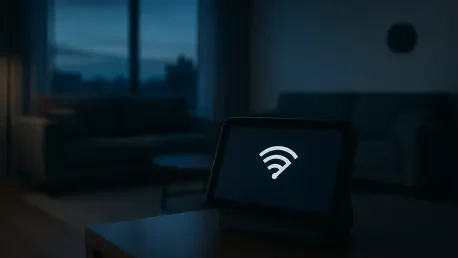
The outage manifested through a frustrating set of hardware and software failures that compromised the core utility of the ecosystem. Smart speakers became unresponsive to verbal requests, often returning error messages or remaining completely silent. Meanwhile, smart displays were reported as bricked, stuck on perpetual loading screens or blank interfaces. These displays, which usually serve as the central nervous system for modern kitchens and living rooms, became nothing more than glowing paperweights. The lack of feedback from these devices created a sense of confusion, as users attempted to troubleshoot their own home networks before realizing the problem was far beyond their control. This total lack of local fallback functionality meant that even the most basic interactions, such as setting a kitchen timer or checking the weather, were suddenly impossible for a significant portion of the global user base, leaving many households feeling functionally hollow and isolated.
The smartphone app also failed to bridge the communication gap, leaving homeowners unable to manually toggle lights, adjust thermostats, or manage security settings. Users who attempted to use the mobile interface were met with spinning icons and connection error messages, indicating that the mobile infrastructure was as compromised as the physical hardware. This left many in a precarious position, especially those who had integrated their security sensors and locks into the platform. Without the ability to manually override certain cloud-dependent automations, some residents found themselves unable to deactivate alarms or monitor their property remotely. The failure of the app interface was particularly damaging because it removed the primary alternative control method, proving that the entire ecosystem is built on a single, fragile layer of connectivity that offers no meaningful secondary path for user commands during a significant server crisis affecting the entire globe.
Technical Origins and Future Resilience
Server-Side Failures: The Architecture of Instability
Technical analysis indicates that the root cause of this chaos is strictly server-side, meaning the failure exists within the cloud infrastructure rather than the physical devices in people’s homes. Because the remote computers responsible for processing voice data and sending instructions were offline, standard troubleshooting protocols proved useless. In fact, experts warned that performing factory resets could worsen the situation, as devices would be unable to re-establish a connection with the unstable cloud servers during the setup process. This created a paradoxical situation where the usual advice for fixing technology—turning it off and on again—actually posed a risk of permanent deactivation until the service was restored. The inability of devices to function without a persistent handshake with the central server illustrates the rigid nature of current designs, which prioritize cloud processing over local resilience and user autonomy in the modern smart home.
The specific nature of the server failure suggests a breakdown in the authentication layer, which is responsible for verifying that a device has the right to communicate with the network. When this layer fails, even if the device is powered on and connected to local Wi-Fi, it cannot receive authorization to execute commands. This type of systemic failure is often the result of a botched update or database corruption that propagates through the network faster than safety protocols can catch it. In this case, the synchronization of the failure suggests that a change pushed to the production environment lacked the necessary guardrails to prevent a total shutdown. This highlights a critical flaw in modern dev-ops practices where the speed of deployment is sometimes valued over the stability of essential services. Without robust, decentralized authentication methods, the smart home remains at the mercy of a manufacturer’s ability to maintain a perfect, uninterrupted server presence.
Strategic Insights: Designing a More Autonomous Home
To mitigate the risks exposed by this global failure, homeowners should consider diversifying their technology stacks with offline-first alternatives. This involved integrating physical switches for all critical lighting and ensuring that thermostats had manual override capabilities that did not depend on a digital interface. Experts suggested that relying on a single ecosystem for both convenience and security was a strategy that invited disaster during server-side collapses. By maintaining a hybrid approach where essential home functions remained accessible through non-networked means, users protected their daily routines from the volatility of corporate infrastructure. Furthermore, prioritizing devices that supported local API access allowed for the creation of redundant control systems that functioned independently of the primary cloud provider. These proactive measures transformed the home from a fragile node in a global network into a more resilient environment capable of local control.
Ultimately, the consensus among industry leaders was that manufacturers had to prioritize system resilience over feature expansion in the coming years. This shift required the development of edge computing solutions that processed sensitive commands locally before ever reaching out to the cloud. The event served as a stark reminder of the fragile nature of the modern connected home and prompted a re-evaluation of how consumer trust was maintained. Companies that failed to provide reliable local fail-safes saw a measurable decline in user loyalty, as the demand for always-available infrastructure became a non-negotiable requirement for the modern consumer. The lessons learned from this global outage paved the way for a new generation of smart devices that balanced the power of the cloud with the necessity of local autonomy. By focusing on these architectural changes, the industry moved toward a more stable future where server errors no longer paralyzed the home environment.