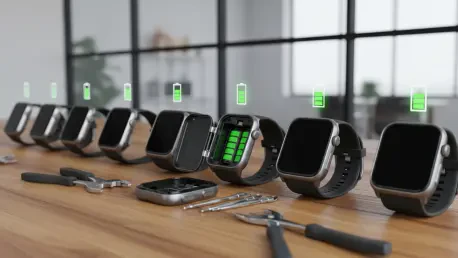

The sight of a thousand-dollar smartwatch transitioning into a paperweight simply because a tiny lithium cell has reached its chemical limit is becoming a defining image of the modern consumer electronics landscape. The European Union has long been regarded as the global watchdog for consumer rights and environmental standards, pushing for a future where gadgets are no longer destined for the landfill. However, a recent shift in legislative focus has sparked a heated debate regarding whether new battery exemptions will turn the most popular wearables into high-tech disposables. While the goal is to balance safety with sustainability, the introduction of loopholes for certain portable electronics threatens to undermine years of environmental progress. This analysis explores the tension between safety-driven exemptions and the growing mountain of electronic waste, examining whether long-term ecological health is being traded for short-term device integrity.
The Paradox of Progress in the European Gadget Market
The European Union’s legislative framework has consistently pushed manufacturers toward a circular economy, mandating that devices be designed for longevity and repairability. The cornerstone of this effort was a requirement for user-accessible batteries in all portable electronics, intended to combat planned obsolescence. Historically, the tech industry resisted these changes, citing design constraints and the need for sleek, waterproof aesthetics. Recently, the European Commission introduced a pivotal clarification where devices classified as wet appliances or those worn directly on the body may be exempt from strict user-replacement rules. Understanding this shift is vital because it sets a precedent for how the next decade of consumer technology will be built and sold across the continent.
From Circular Ambitions to Regulatory Reality
For several years, the push for a circular economy focused on reducing the volume of devices that end up in landfills. This regulatory push was initially hailed as a revolutionary step toward holding manufacturers accountable for the entire lifecycle of a product. By mandating that batteries be replaceable by the end user, the EU sought to break the cycle of forced upgrades triggered by simple hardware degradation. However, the practical application of these rules encountered resistance when manufacturers argued that structural integrity was at risk. The recent pivot toward exemptions suggests a recognition that some technology may be too specialized for standard repair mandates, though this logic remains controversial among environmental advocacy groups.
Examining the Practical Fallout of Battery Exemptions
The Safety Loophole: How “Wet Appliances” Redefined Wearables
The primary justification for exempting wearables like smartwatches and wireless earbuds centers on the wet appliance classification. By labeling body-worn devices as such, the regulatory body acknowledges that maintaining a hermetic seal against water and dust is essential for user safety. Manufacturers argue that allowing an untrained consumer to pry open a device could compromise its moisture protection, leading to potential battery fires or electrical malfunctions. While this argument has merit regarding structural integrity, it creates a significant loophole for products that are rarely submerged. Critics point out that even devices not intended for diving or swimming, such as smart glasses, are now being shielded by this logic.
The Environmental Cost of Skipping the Reuse Phase
The environmental implications of these exemptions are significant, as global e-waste production continues to outstrip recycling efforts. The core of the environmental hierarchy is the reuse phase, which is effectively bypassed when a battery cannot be replaced by the owner. When a pair of high-end earbuds loses the ability to hold a charge after a few years of use, the unit often ends up in a drawer because the cost of professional repair exceeds the value of the hardware. Even with robust corporate recycling programs, the energy required to break down a device for raw materials is far greater than the energy saved by simply replacing a battery. By exempting the fastest-growing segment of consumer tech, the EU may be facilitating a disposable culture.
Design Challenges and the Myth of Engineering Impossibility
A common defense from major technology firms is that the extreme miniaturization of modern wearables makes user-replaceable batteries an engineering impossibility. Claims are frequently made that glue and soldered connections are necessary to achieve the compact form factors that consumers demand. However, this narrative is challenged by disruptive innovators that have successfully produced modular, repairable wireless audio devices. These examples suggest that the barrier to sustainable design is often a matter of corporate priority rather than a lack of technical capability. If industry trendsetters are allowed to use exemptions to avoid redesigning their products, there is little incentive for the rest of the market to innovate toward repairability.
Shaping the Next Generation of Sustainable Electronics
Looking ahead from 2026 toward 2028, the wearable industry stands at a crossroads. Emerging trends suggest a potential split in the market where one side moves toward luxury disposables and the other toward modular longevity. There is a projected rise in Repair-as-a-Service models, where manufacturers offer more affordable, professional battery swaps to compensate for the lack of user access. Furthermore, regulatory pressure is unlikely to disappear entirely. As e-waste totals climb, the definitions of wet appliances may eventually be tightened to ensure that only truly specialized equipment remains exempt. Advancements in solid-state batteries could also change the landscape, potentially offering longer lifespans that mitigate the need for frequent hardware replacements.
Navigating a Disposable Market: Strategies for Conscious Consumers
For consumers and businesses navigating this shifting landscape, the best strategy involves prioritizing longevity over brand loyalty. When purchasing new wearables, it is beneficial to look for brands that offer transparent repair scores or documented battery replacement programs. For current device owners, seeking out third-party repair shops remains a vital alternative to buying the next model; many professional technicians can replace non-replaceable batteries safely using specialized tools. Businesses should also consider the total cost of ownership, as a slightly more expensive, repairable fleet of devices is often more economical in the long run than a cycle of cheap hardware. Supporting legislation that demands better design standards remains a highly effective way for the public to influence the industry.
The Long-Term Stakes of the Right to Repair Movement
The debate over EU battery exemptions served as a fundamental test of the commitment to a sustainable future. While safety and water resistance remained important factors, they did not serve as permanent shields for designs that ignored the reality of a planet burdened by electronic waste. The Right to Repair movement reached a critical juncture where the convenience of the manufacturer was weighed against the health of the environment. If society accepted that personal technology was inherently disposable, it risked setting a standard that was difficult to reverse later. Ultimately, the goal was a design philosophy that respected both the safety of the user and the finite resources of the earth through thoughtful innovation.