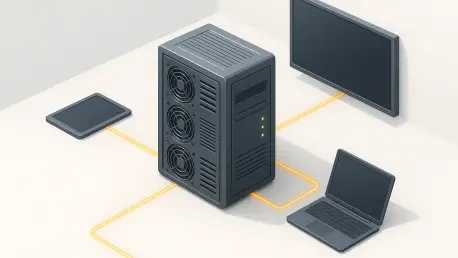

Homeowners are increasingly repurposing old computer hardware or dedicated NAS units to create robust media ecosystems that function independently of external internet connections. This evolution marks a departure from the traditional shelf-stable collection where physical discs served as the primary method of delivery. For decades, enthusiasts prioritized the bit-for-bit quality of Blu-ray and UHD formats, accepting the trade-off of physical clutter and manual handling for superior fidelity. However, as the digital landscape has matured, the friction inherent in these systems has become a barrier for modern users. The transition toward centralized digital storage represents a middle ground, allowing collectors to retain the high-bitrate quality of original media while gaining the instant accessibility of streaming. This movement is not merely about convenience but about preserving the long-term viability of a personal library as media consumption moves away from static hardware.
The Vulnerabilities: Protecting Against Tangible Media Degradation
Physical media, while tangible and satisfying to own, carries a latent fragility that often catches collectors off guard. The phenomenon of disc rot, caused by the gradual oxidation of the reflective layer, can render a collection unreadable within a decade, regardless of storage quality. Beyond chemical degradation, the physical mechanics of handling discs introduce a risk of micro-scratches and oils that compromise playback on sensitive high-definition lasers. For households with young children or pets, the risk profile increases significantly, leading to a cycle of repetitive purchases for favorite titles that have been damaged. This recurring financial drain, coupled with the increasing scarcity of high-end disc players as manufacturers shift focus to digital distribution, has made the purely physical model look increasingly precarious. Collectors realize that the “forever” nature of a disc is a marketing myth that requires constant vigilance and specialized hardware maintenance.
Earlier attempts to solve these physical limitations usually involved cumbersome manual backups or the creation of redundant copies, but these methods often added more complexity than they resolved. Digitizing a library into a flat folder structure on a standard hard drive lacked the metadata and visual flair that makes a collection enjoyable to browse. Furthermore, the sheer volume of data required for high-quality 4K transfers meant that many collectors were forced to manage multiple external drives without a cohesive interface. This fragmentation created a situation where finding a specific movie was often more difficult than searching through physical shelves. The logistical overhead of updating individual files and ensuring compatibility across different television brands created a technology tax that discouraged users from engaging with their libraries. It became clear that without a unified software layer to manage the presentation of these files, the digital transition would remain niche.
The Infrastructure: Building a Seamless Personal Streaming System
The emergence of Plex as a dominant force in private media management has effectively bridged the gap between raw file storage and a professional-grade user experience. By indexing a user’s local files and automatically downloading high-resolution posters and cast information, the platform provides a viewing experience that rivals or exceeds that of major subscription services. This software layer transforms a collection of MKV files into a dynamic library that can be navigated from a smart TV or mobile device with ease. More importantly, it handles the complex process of transcoding, allowing high-bitrate content to be played back on devices that might not natively support specific codecs. This flexibility means that a collector can enjoy their 1:1 disc rips on a living room OLED screen while simultaneously allowing other family members to stream the same content at lower bitrates on their tablets. The centralization of the library onto a single server removes the need for hardware in every room.
Strategic organization of media also benefits from the shift toward digital servers, especially when dealing with expansive television series or multi-disc special editions. In a physical environment, managing twenty seasons of a show involves dozens of cases and the constant swapping of discs between episodes, which disrupts the immersion of binge-watching. A digital server eliminates this friction by presenting the entire series in a linear format that remembers exactly where the viewer stopped, regardless of which device they use next. This metadata-driven approach also allows for advanced filtering, where collectors can sort their entire library by director, studio, or resolution with a few clicks. This level of granular control turns a static wall of plastic into a living database of cinematic history. By decoupling the content from the physical object, collectors are free to store their valuable limited editions in protective sleeves, ensuring that the monetary value is preserved.
The Sovereignty: Securing Media Collections Against Licensing Flux
The pivot to self-hosted servers is largely a defensive maneuver against the increasing volatility of the mainstream streaming market. As licensing agreements expire and major studios retract content to launch their own exclusive platforms, many digital purchases on commercial storefronts have proven to be nothing more than long-term rentals that can be revoked at any time. By maintaining a local copy of a film on a personal server, the user gains absolute sovereignty over their entertainment, immune to the whims of corporate mergers or server shutdowns. This independence is particularly valuable for those who enjoy niche cinema, foreign films, or obscure documentaries that are often the first to be purged from commercial libraries. The server acts as a personal fortress for culture, ensuring that a favorite movie is always available even during internet outages or regional service disruptions. This sense of security is the ultimate draw for serious collectors who view their libraries as a history deserving protection.
To ensure the longevity of these private ecosystems, users prioritized the implementation of redundant storage arrays and high-capacity hard drives that offered protection against hardware failure. They moved beyond simple desktop setups toward dedicated server enclosures that allowed for seamless expansion as 4K and 8K libraries grew in size. Wise collectors established a routine of automated backups to off-site locations or secondary NAS units to safeguard their painstakingly curated metadata and files. This proactive approach to data management transformed the hobby from a passive act of purchasing plastic into an active role as a digital archivist. By investing in high-quality networking infrastructure, enthusiasts guaranteed that their local streaming remained fluid and responsive throughout the household. Looking ahead, the focus shifted toward optimizing power consumption and exploring more efficient compression algorithms. This transition successfully bridged the gap between tactile joy and digital demands.