
Software engineering organizations frequently encounter a debilitating productivity wall when massive feature updates paralyze the code review process for entire development teams. Historically, these “mega-pull requests” forced maintainers to sift through thousands of lines of code simultaneously, often leading to overlooked bugs and significant delays in product shipping cycles. By introducing native support for stacked pull requests in public preview, GitHub is now democratizing a sophisticated workflow previously reserved for internal systems at hyper-scale companies like Google or Meta. This transformation shifts the focus from monolithic updates to a modular, chronological approach where complex features are broken down into manageable, interdependent segments. As this capability moves toward standard implementation in 2026, it represents a fundamental change in how version control platforms handle the growing volume of code generated by increasingly fast-moving development teams.
Technical Foundations: Mastering the Mechanics of Stacking
Decomposing Features: The Logic of Layered Pull Requests
The architectural foundation of stacking lies in the deliberate decomposition of a large-scale project into a series of smaller, logical units that build upon one another sequentially. Instead of submitting a single, overwhelming request that contains database migrations, backend logic, and frontend modifications, a developer creates a distinct pull request for each specific layer of the change. This chronological structure ensures that the core infrastructure is reviewed and verified before the higher-level application logic is even considered by the team. Each segment exists as its own entity with a clear purpose, allowing the reviewer to provide focused feedback on isolated concerns without the distraction of unrelated code changes. This method not only improves the granularity of the review process but also creates a historical record of the development journey that is much easier to navigate during future audits or troubleshooting sessions.
Maintaining the integrity of these layers requires a shift in how dependencies are managed within the version control system itself. In a stacked workflow, the second pull request in a sequence is branched from the first, rather than from the main repository trunk, creating a chain of reliance that mirrors the actual development process. This allows for parallel development where a programmer can continue working on advanced UI components while the foundational API changes are still undergoing active peer review. If a reviewer suggests a modification to the base layer, the developer can propagate those changes up through the rest of the stack with minimal manual intervention. By isolating the changes into these discrete units, teams can ensure that every single line of code receives the appropriate level of scrutiny, preventing the “skimming” effect that often occurs when a person is faced with an excessively large diff.
Navigating Structure: Visual Tools and Command Line Extensions
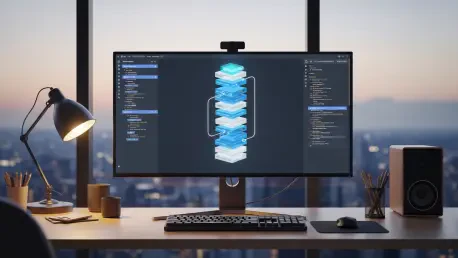
To bridge the gap between complex command-line operations and user-friendly interfaces, the introduction of visual stack maps provides essential context for both authors and reviewers. These maps display the entire hierarchy of related pull requests, showing exactly where a specific change sits within the broader feature timeline and identifying which segments are blocked or ready for merging. Without this visual representation, navigating a series of interconnected branches can quickly become a cognitive burden, leading to confusion about which changes are current and which are pending upstream approvals. The web interface now explicitly highlights these dependencies, allowing a maintainer to see the “big picture” while still focusing on the technical details of a single pull request. This level of transparency is critical for maintaining high-velocity development cycles where multiple contributors might be touching different parts of the same feature set simultaneously.
Complementing the visual enhancements is the gh-stack command-line extension, which automates the tedious aspects of managing multiple branches and keeping them synchronized with the remote server. This tool allows developers to create, update, and rebase an entire sequence of changes with single commands, significantly reducing the overhead associated with maintaining a clean development history. In the past, manually rebasing a stack of five or six branches was a prone-to-error process that could lead to merge conflicts and lost productivity; however, the native implementation handles these transitions smoothly. By integrating these capabilities directly into the GitHub ecosystem, the platform ensures that branch protection rules and automated status checks remain fully functional across the entire chain. This consistency guarantees that the same security and quality standards applied to standard pull requests are enforced for every individual layer.
Strategic Evolution: Achieving Long-Term Development Sustainability
Industry research continues to highlight that smaller review units lead to significantly better software outcomes, with pull requests under 200 lines being approved three times faster than their larger counterparts. When developers are forced to consolidate weeks of work into a single submission, the psychological burden on the reviewer often leads to “mental fatigue,” where subtle architectural flaws or security vulnerabilities are easily missed. Stacking encourages a culture of continuous, incremental feedback that aligns with the natural cognitive limits of human engineers. By breaking down a 1,000-line update into five 200-line segments, the team can maintain a high level of scrutiny without experiencing the exhaustion that typically accompanies large-scale code audits. This granular approach not only accelerates the immediate approval process but also reduces the long-term cost of technical debt by ensuring that defects are caught early in the development lifecycle.
The implementation of native stacking fundamentally altered the landscape of software engineering by prioritizing the human capacity for review over the raw speed of code production. Organizations that adopted these workflows observed a marked improvement in code quality as smaller, more focused updates allowed for deeper technical analysis and more meaningful architectural discussions. Moving forward, teams should prioritize the training of their staff in these modular methodologies to ensure that the bottleneck of verification does not hinder the innovation made possible by high-speed authoring tools. It became clear that the successful integration of such systems required a cultural shift toward “reviewability,” where the success of a developer was measured by the clarity and navigability of their submitted changes. By formalizing this approach, the industry established a new standard for collaborative development that balanced rapid delivery with sustainable engineering.