


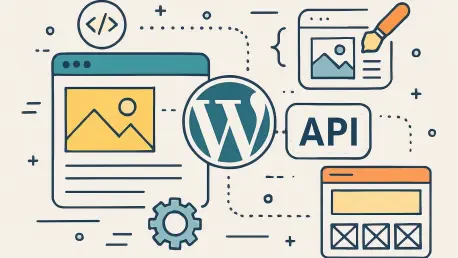

The rise of headless WordPress allows editors to manage content in a familiar dashboard while developers build the public interface with modern JavaScript frameworks. For over two decades, the platform functioned primarily as a monolithic entity where the database, administrative tools, and visual output were inextricably linked through PHP templates. This traditional architecture served millions of websites effectively but eventually met its limits as the digital world expanded beyond desktop browsers into a fragmented ecosystem of mobile apps, wearable technology, and smart appliances. The introduction of the REST API represents a pivotal shift, transforming the world’s most popular content management system into a flexible data hub. By exposing internal site data as structured JSON, the API removes the constraints of theme-based design, allowing for a more modular and scalable approach to web development. This evolution ensures that content is no longer a static element trapped within a specific page layout but a dynamic asset capable of flowing into any digital environment or interface.
Technical Connectivity: The Engine of Modern Data Exchange
Endpoint Functionality: The Digital Gateways of Content
The internal mechanics of the REST API rely on a sophisticated system of endpoints, which function as specific addresses that external applications use to interact with site data. When a developer makes a request to a route like /wp-json/wp/v2/posts, the system retrieves the requested information and delivers it in a lightweight, structured format known as JSON. This method of communication is fundamentally different from the way traditional WordPress themes operate, as it bypasses the need to render the entire HTML frontend. By focusing purely on data transmission, the API enables a much leaner interaction between the server and the client, allowing for faster data retrieval and more efficient processing. This granular control means that developers can request only the specific fields they need—such as a featured image URL or a post title—without the overhead of loading unnecessary metadata or styling information.
Furthermore, these endpoints are not limited to simple read-only operations; they support a full range of interactions including creating, updating, and deleting content, provided the correct authentication is in place. This interactivity allows for the development of complex administrative tools and remote publishing platforms that exist entirely outside the WordPress dashboard. For instance, a dedicated editorial team might use a custom-built desktop application to submit drafts, while the WordPress backend silently handles the storage and categorization. The standardization of these data paths simplifies the integration process for developers who may not be experts in PHP but are proficient in modern web standards. This accessibility has broadened the ecosystem, inviting a new generation of engineers to build upon the platform’s foundation without feeling restricted by its legacy codebase or original design philosophy.
Language Agnosticism: Bridging Diverse Programming Environments
One of the most transformative aspects of the REST API is its ability to make WordPress data understandable to virtually any programming language. Historically, interacting with the platform’s database required a deep understanding of PHP and the internal WordPress function library. Now, because JSON is a universal data format, a mobile developer using Swift for iOS or Kotlin for Android can fetch and display articles just as easily as a web developer using React or Vue.js. This language independence has effectively broken the “PHP silo,” allowing WordPress to serve as the backend for a wide variety of software applications that were previously difficult to integrate. It allows enterprise organizations to maintain their content in a central repository while feeding that information into various proprietary systems, ensuring consistency across a brand’s entire digital presence without duplicating effort.
Moreover, this agnosticism fosters a “content-first” development cycle where the user interface and the data management layer can evolve on different schedules. A company might decide to completely redesign its frontend using a new framework like Svelte while keeping its existing WordPress content structure entirely intact. This separation of concerns reduces the risk and cost associated with major technological shifts, as the underlying content remains a portable and stable asset. The ability to pipe data into Python-based machine learning models for sentiment analysis or into Java-based corporate dashboards further demonstrates how the API has elevated the platform from a simple website builder to a sophisticated piece of enterprise infrastructure. It encourages a more collaborative environment where different specialized teams can work on the same project using the tools they are most comfortable with, leading to higher quality and more innovative final products.
The Decoupled Landscape: Navigating Headless Implementations
Decoupled Logic: Separating Presentation and Management
The concept of “headless” or decoupled WordPress has become a dominant trend in modern web design, driven almost entirely by the capabilities of the REST API. In a decoupled setup, the backend—where users write posts and manage media—is completely separated from the frontend that the public actually sees. This allows developers to utilize high-performance frameworks like Next.js or Gatsby to build websites that are incredibly fast and highly interactive. By moving away from the traditional theme system, developers avoid the “bloat” that often comes with complex plugins and heavy PHP templates. Instead, the frontend functions as a standalone application that fetches data from the WordPress API only when necessary, leading to a more streamlined user experience that feels more like a desktop app than a series of interconnected web pages.
This architectural shift also provides a significant boost to developer productivity and creative freedom. Without the constraints of the WordPress “Loop” or specific template hierarchy, designers can experiment with unconventional layouts and complex state-managed interactions that would be difficult to implement in a standard theme. The separation also enhances the stability of the overall system; an error in the frontend code is much less likely to bring down the entire backend management system, and vice versa. Editors can continue to upload content and manage the site through the familiar interface they have used for years, while the development team works independently on the public-facing side. This harmony between user-friendly management and cutting-edge development is the primary reason why many high-traffic media sites and tech companies have adopted a headless approach for their primary web properties.
Omnichannel Delivery: Serving Multiple Platforms Simultaneously
Beyond the traditional website, the REST API enables a truly omnichannel content strategy where a single WordPress installation acts as the “source of truth” for various digital touchpoints. In a world where consumers interact with brands through mobile apps, voice assistants, and even smart mirrors, the ability to centralize content management is invaluable. A news organization, for example, can publish a single story in the WordPress dashboard and have it instantly appear on their responsive website, their native mobile application, and as a summarized snippet for a smart speaker. This efficiency eliminates the need for manual updates across different platforms, reducing the likelihood of errors and ensuring that the brand message remains consistent regardless of how the audience accesses it.
Furthermore, the API facilitates the delivery of content to specialized environments like digital signage in retail locations or interactive kiosks at events. These displays can pull real-the updates from a WordPress site, allowing marketing teams to change promotions or schedules in real-time from a central location. This capability transforms WordPress into a versatile engine for digital signage, providing a level of agility that was previously only available through expensive, proprietary enterprise systems. By treating content as a fluid resource that can be formatted on the fly for different screen sizes and input methods, the REST API allows organizations to scale their digital reach without a proportional increase in administrative overhead. This streamlined workflow is essential for modern brands that need to stay relevant in an increasingly crowded and fast-moving digital marketplace.
Strategic Advantage: Enhancing User Experience and Integration
Custom User Interfaces: Moving Beyond Preset Themes
The flexibility afforded by the REST API has paved the way for highly bespoke user experiences that prioritize brand identity and user engagement over pre-defined layouts. In the past, even the most customized WordPress sites often felt constrained by the underlying structure of the theme they were built upon. With the API, the user interface can be built from scratch, allowing for unique navigation patterns, immersive animations, and dynamic content loading that feels seamless. For instance, an e-commerce site can use the API to create a “quick view” product modal that pulls data without refreshing the page, or a travel blog can implement an interactive map that updates post lists as the user scrolls. These micro-interactions are vital for retaining user attention and providing a premium digital experience that stands out from the generic templates found across the web.
Additionally, this level of customization extends to the way content is searched and filtered. Developers can build sophisticated, real-time search interfaces that query the API and display results instantaneously, providing a much more responsive experience than the default WordPress search function. This is particularly beneficial for content-heavy sites like resource libraries or online magazines where findability is a key metric for success. By leveraging the power of modern JavaScript and the API’s data delivery, designers can create interfaces that are not only visually stunning but also highly functional and tailored to the specific needs of their target audience. This shift toward custom-engineered frontends has elevated the standard of what a “WordPress site” can be, challenging the perception that the platform is only suitable for simple blogs or small business homepages.
Third-Party Connectivity: Synchronizing Enterprise Data
The WordPress REST API serves as a powerful conduit for connecting a website with a broader ecosystem of enterprise tools and third-party services. Modern businesses rarely rely on a single software solution; instead, they use a suite of tools for customer relationship management, marketing automation, and financial tracking. The API allows WordPress to communicate directly with these platforms, enabling automated data transfers that eliminate the need for manual entry. For example, a lead captured through a custom form on a WordPress site can be automatically pushed to a CRM like Salesforce or HubSpot via the API, triggering an immediate follow-up sequence. This level of integration ensures that data flows smoothly across the organization, providing a more holistic view of the customer journey and improving overall operational efficiency.
Moreover, this connectivity works in both directions, allowing WordPress to display data from external sources within its own interface. A financial services site might use the API to pull real-time stock market data or currency exchange rates, while a sports news site could integrate live scores and player statistics. By acting as a central hub that aggregates data from various origins, WordPress becomes a more valuable and interactive platform for its users. This ability to sync with external APIs also simplifies the process of building complex membership sites or subscription-based platforms where user data must be kept consistent across multiple services. The result is a more cohesive digital strategy where the website is not an isolated island but a fully integrated component of a company’s broader technological infrastructure, capable of scaling alongside the business’s needs.
Operational Excellence: Performance and Security in API Architecture
Optimization Strategies: Mitigating the Complexity Tax
While the REST API offers immense flexibility, it also introduces a “complexity tax” that requires careful management to ensure optimal performance. In a traditional setup, the server renders the page and sends it to the user; in an API-driven architecture, the user’s browser often has to make multiple requests to the server to fetch the necessary data before the page can be fully displayed. To prevent latency and ensure a fast loading experience, developers must implement robust caching strategies. Using a persistent object cache like Redis or Memcached can significantly speed up API responses by storing frequently requested data in memory. Additionally, implementing a content delivery network (CDN) to cache JSON responses geographically closer to the user can reduce the time it takes for data to travel across the network, ensuring a snappy experience even for global audiences.
Efficiency can also be improved by optimizing the way data is requested from the API. Developers should avoid “over-fetching” by creating custom endpoints that return only the exact data required for a specific component, rather than using the default endpoints which might return hundreds of lines of unnecessary code. Techniques such as batching requests or using GraphQL as a layer over the REST API can also help minimize the number of round-trips between the client and the server. By being intentional about the volume and frequency of data transfers, development teams can build headless applications that outperform traditional sites in terms of speed and responsiveness. This focus on performance is not just a technical requirement but a business necessity, as even a one-second delay in load time can lead to a significant drop in user engagement and conversion rates.
Authentication Protocols: Protecting the Content Repository
Security in an API-driven environment requires a more sophisticated approach than the traditional username-and-password login. When data is being accessed by external applications, it is essential to have rigorous authentication protocols in place to prevent unauthorized access to sensitive information. For public-facing content like blog posts, the API remains open and accessible, but for administrative tasks or private data, developers often use methods such as Application Passwords or JSON Web Tokens (JWT). These systems allow the server to verify the identity of the requesting application without exposing the user’s main login credentials. This “stateless” form of authentication is ideal for modern web applications where the frontend and backend may reside on different servers or domains.
Beyond authentication, it is vital to implement the principle of “least privilege” when configuring API access. This means ensuring that each external application or user only has access to the specific data and actions they need to perform their function. For example, a mobile app that only displays news should not have the ability to delete comments or change site settings. Rate limiting is another essential security measure, preventing malicious actors from overwhelming the API with thousands of requests in a short period, which could lead to a denial-of-service attack. By combining these technical safeguards with regular security audits and updates, organizations can leverage the power of the REST API while maintaining a secure and resilient digital presence. This proactive stance on security allowed the community to move forward with confidence, knowing that the platform’s openness did not have to come at the expense of its integrity.
The evolution of the WordPress REST API established a new baseline for enterprise-grade flexibility and cross-platform interoperability. By decoupling the content management experience from the final presentation layer, the industry moved toward a more modular philosophy that prioritized long-term scalability and creative freedom. Organizations were encouraged to audit their existing infrastructure to identify areas where a headless approach could reduce technical debt or improve the user experience on mobile devices. The shift away from monolithic structures favored development teams that embraced modern JavaScript frameworks and robust security protocols. As the digital landscape continued to diversify, the ability to treat content as a portable, language-agnostic asset became a fundamental requirement for staying competitive in a multi-screen world. Final strategic considerations were often centered on balancing the added complexity of API-driven builds with the genuine return on investment in performance and brand consistency.







