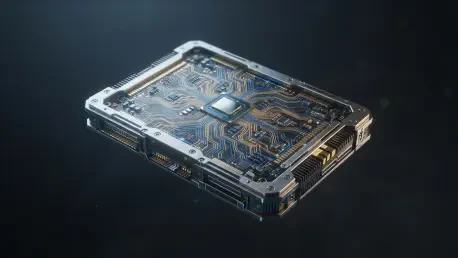

Universal Quantum’s use of commercial semiconductor foundry lines marks a shift from bespoke laboratory fabrication to the high-repeatability manufacturing required for deep-tech deployment. As the industry moves beyond the honeymoon phase of theoretical physics and small-scale experiments, the focus has shifted toward building systems that can actually work in a commercial environment. The newly unveiled integrated Quantum Processing Unit (iQPU) represents a fundamental departure from the fragile, room-sized prototypes that defined the previous decade. By consolidating trapped-ion qubits, intricate control electronics, and high-speed interconnects onto a single architecture, Universal Quantum has addressed the scaling bottleneck that previously made large-scale quantum computing seem like a distant dream. This approach transforms the quantum processor from a scientific curiosity into a reliable industrial component, paving the way for machines that can tackle tasks far beyond the reach of classical supercomputers while maintaining the high operational stability required for the most demanding enterprise applications.
Engineering the Path to Quantum Utility
Modular Architecture: Design and Advanced Interconnects
The core of this scalable framework lies in the proprietary UQConnect interface, which facilitates a seamless link between multiple iQPU modules. This modularity is a game-changer because it allows for the expansion of computational power without necessitating a complete overhaul of the existing system architecture. By treating each iQPU as a standardized, repeatable unit of computation, engineers can now scale a quantum computer simply by adding more chips to the network, mirroring the development of early blade servers.
Furthermore, the iQPU employs a Quantum Charge-Coupled Device architecture that allows ions to be physically moved across a compute surface exceeding 400 mm². This mobility represents a significant departure from fixed-qubit architectures where qubits are stationary and can only interact with neighbors. In a mobile-ion system, qubits can be shuttled to different zones to interact with any other qubit, which drastically simplifies logic for error correction and execution, ensuring that the hardware remains adaptable to the specific requirements of any algorithm.
Production Strategy: Leveraging Commercial Semiconductor Manufacturing
One of the most significant barriers to quantum adoption has been the specialized nature of hardware production, which often relied on university cleanrooms and artisanal techniques. Universal Quantum has bypassed this limitation by moving production to commercial 200 mm semiconductor foundry lines. By leveraging these established industrial facilities, the company can produce iQPUs with the high degree of repeatability and yield that only a mature supply chain can offer, ensuring the hardware meets rigorous reliability standards required for 24/7 industrial operations.
Integrating control electronics directly onto the silicon represents a victory over the wiring problem that has plagued quantum physicists for years. Traditional setups involve a chaotic web of coaxial cables that create heat and limit qubit control. The iQPU solves this by embedding ultra-low noise control technology within the chip itself, creating a self-contained environment. This on-chip integration ensures that signals remain clean even as the system grows to include millions of qubits, reducing the overall footprint and making it feasible to house systems in standard data centers.
Strategic Implications and Industrial Impact
Global Reach: Real-World Applications and Contracts
The practical value of this integrated architecture is already being demonstrated through multi-million dollar contracts, most notably with the German Aerospace Center. These partnerships are not merely experimental; they are focused on deploying quantum systems for high-impact missions such as climate modeling and space mission planning. The ability to simulate complex chemical reactions or optimize satellite trajectories requires a level of precision that classical computers struggle to maintain, making the iQPU a vital tool for researchers who require consistent and verifiable results.
Investor confidence in this modular approach has reached new heights, as evidenced by a substantial $100 million Series A funding round. This financial backing reflects a growing consensus that trapped-ion technology is a viable path for scaling without succumbing to the heat and noise issues found in other architectures. Unlike designs that require massive cryostats for every few dozen qubits, the iQPU’s design allows for a more manageable thermal profile. This makes it an attractive option for commercial enterprises that need to scale resources without investing in unsustainable infrastructure.
Societal Influence: Shaping the Future of Economic and Social Good
The transition from quantum supremacy to the era of quantum utility is currently reshaping global economic forecasts. Analysts project that the deployment of fault-tolerant quantum systems could generate between $60 billion and $100 billion in annual revenue by the mid-2030s, with a total economic impact reaching trillions. This value is driven by the ability of machines like the iQPU to solve optimization problems in logistics, such as shipping routes, which reduces carbon emissions. Financial industries are also adopting these systems for high-speed risk assessments with unprecedented accuracy.
Beyond commerce, the iQPU addressed pressing social challenges during its initial rollout. Through the Open Quantum Institute, this technology was applied to critical research areas, including studies on endometriosis and the discovery of new carbon-capture materials. This move toward social good ensured that the benefits of the quantum revolution were distributed across a wide range of human needs. Organizations that successfully implemented these modular units moved away from laboratory hardware limitations and secured a functional, industrial reality that provided a clear competitive advantage.