
The economic architecture of high-performance blockchains often involves hidden friction points that quietly erode the capital efficiency of decentralized applications over long-term operational cycles. During the Solana Breakpoint 2026 conference, Brennan Watt, the CEO of Anza, introduced a

The transition from traditional mechanical hard drives to solid-state technology has redefined expectations for portability and durability in the personal data storage industry. As users generate increasingly massive volumes of high-definition content, the reliance on remote servers managed by

A unique technical bottleneck exists because legacy fabrication facilities are incapable of pivoting to the high-layer NAND production required for advanced enterprise storage. This fundamental limitation has fractured the global industry into a two-tier ecosystem where standard consumer-grade
Many decentralized finance users mistakenly assume that because information was posted to a ledger, the underlying protocol guarantees its permanent retrievability for years to come. In reality, the 2026 blockchain landscape relies on a sophisticated distinction between the immediate accessibility
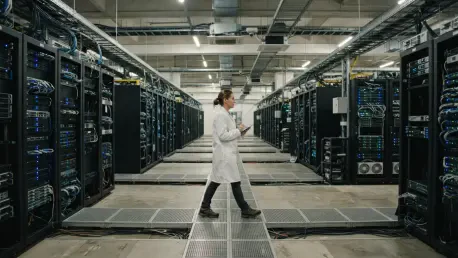
At the European X-ray Free-electron Laser facility, dCache coordinates over four hundred physical hosts to provide a total storage capacity exceeding one hundred twenty petabytes. This massive undertaking is not merely a matter of hardware but a triumph of specialized distributed architecture. As a

As genomic laboratories across the globe pivot toward a future defined by massive data outputs, the infrastructure supporting this biological information has become as critical as the sequencing chemistry itself. The five foundational pillars of the hub—streaming, monitoring, conversion,