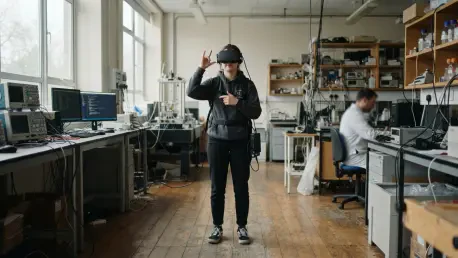

The ethical implications of constant video and audio recording must be addressed as these new communication assistants begin to collect data in both public and private spaces for real-time analysis. This critical dialogue emerged during the recent CG&I × KAIST 2026 XR·AI Winter School and Hackathon, where thirty-two undergraduate innovators gathered at the KAIST Metaverse Graduate School to redefine the boundaries of human-computer interaction. The event challenged participants to move beyond the traditional concept of artificial intelligence as a replacement for human labor, focusing instead on how Extended Reality (XR) can serve as a catalyst for cognitive and physical empowerment. By integrating lightweight Augmented Reality (AR) glasses and immersive headsets with sophisticated AI algorithms, the teams produced prototypes that address significant societal gaps. These technologies represent a shift toward a more inclusive future where digital tools act as invisible mentors rather than obtrusive distractions that distance users from reality.
Innovations in Communication and Educational Technology
Bridging Accessibility Gaps with Smart Technology
A central highlight of the event was the “MAZU” project, which utilizes advanced computer vision to bridge the gap between the deaf and hearing communities. The system identifies the intricate movements of Korean Sign Language (KSL) and American Sign Language (ASL), instantly rendering them into clear text subtitles displayed within an XR headset. This innovation addresses a long-standing communication barrier by providing a portable, real-time alternative to human interpreters or static mobile applications that often disrupt the flow of natural conversation. Beyond linguistic translation, the hackathon explored the concept of “critical-moment AI intervention” to assist individuals in high-pressure social environments. These digital assistants function by monitoring the context of a conversation and surfacing relevant data points only when they are most needed, thereby preventing the cognitive overload that often accompanies constant information streams. By refining the timing of these prompts, researchers created a social assistant that improves human confidence.
Streamlining Knowledge Transfer and Skill Acquisition
In the industrial sector, the transfer of specialized knowledge from experienced veterans to novices often suffers from linguistic ambiguity, such as the use of vague expressions like “flip this switch” or “adjust that dial.” To solve this, a collaborative project introduced a system that interprets these verbal cues and highlights the exact physical components in the user’s field of vision through AR glasses. This visual grounding of verbal commands significantly reduces the learning curve for complex machinery and decreases the likelihood of operational errors in high-stakes environments. Academic settings are also poised for transformation through tools like “Spatial Review,” which converts traditional 2D lecture materials into interactive 3D environments. By analyzing a professor’s speech and notations, the AI generates volumetric models that students can manipulate, making abstract concepts in geometry tangible. These innovations illustrate a broad trend toward experiential learning, where AI captures physical nuances and translates them into a digestible format.
Symbiotic AI Philosophy and Development Hurdles
Promoting Long-Term Personal Growth and Skill Retention
The guiding principle of the hackathon, articulated by researchers at the KAIST Augmented Reality Research Center, is the concept of “Symbiotic AIR4BTS.” This philosophy posits that the most effective AI is one that acts as a temporary scaffold rather than a permanent crutch, facilitating rapid skill acquisition so that the user eventually outgrows the need for the device. Unlike many contemporary technologies that encourage habitual dependency, these XR systems are designed to enhance the neural pathways associated with learning and memory. The objective is to ensure that the insights gained while wearing a headset are internalized and become part of the user’s permanent skill set. This vision of human-centric AI prioritizes the long-term cognitive development of the individual, treating the technology as a training wheel that is eventually discarded once the user achieves mastery. By focusing on the lasting impact of the experience, the developers aim to create a future where wearable technology serves as a launchpad for genuine human self-improvement.
Addressing Technical Stability and Ethical Concerns
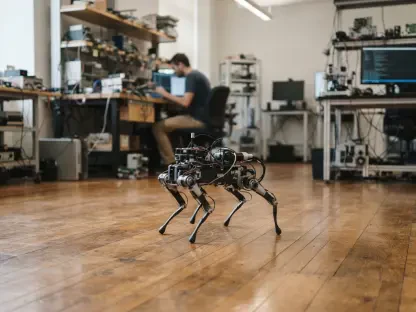
Despite the promising results of these prototypes, the university acknowledged that significant technical challenges remained before these systems could be deployed in everyday environments. Lighting conditions and environmental noise often interfered with the accuracy of the sensors, leading to lag or misinterpretation of visual data that could be dangerous in industrial contexts. Ensuring that these systems were robust enough to handle the unpredictability of the real world was a primary focus for ongoing research. To maintain momentum, KAIST established a framework for integrating the most successful projects into long-term initiatives. Top-performing participants were granted internships to refine their designs, focusing on improving security protocols and user interfaces. The institution planned to hold these events twice a year to ensure a steady influx of innovative solutions to the evolving challenges of the sector. The successful conclusion of the school demonstrated that the future of wearable AI rested on its ability to integrate ethically into the fabric of daily life.