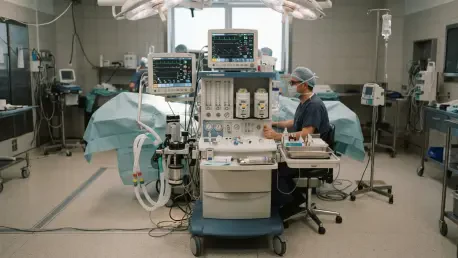

Experienced clinicians often detect signs of patient deterioration by observing surgical maneuvers long before an algorithm registers a change in vital signs. This foundational truth underscores the ongoing evolution of perioperative medicine, where the infusion of artificial intelligence and automated control systems is reshaping the operating room environment. Researchers like Fredericus H. J. van Loon and his peers have argued that while these sophisticated platforms offer unmatched precision in managing drug dosages and physiological stability, they cannot replace the essential human elements of medical practice. The shift toward intelligent closed-loop systems is not simply a technical upgrade but a philosophical transition that requires a careful balance between algorithmic power and clinical wisdom. As automation becomes standard, the focus is shifting toward a symbiotic relationship where technology handles high-frequency data processing while humans provide the ethical oversight and situational awareness that no machine can currently mirror. This integration ensures that the pursuit of efficiency does not come at the cost of the patient-centered care that defines the anesthesiology profession.
The Power: Modern Data Streams
Contemporary anesthesiological care is increasingly dependent on massive, multidimensional data streams that go far beyond basic vital sign monitoring. The traditional approach to patient observation has evolved into a high-frequency data collection process that merges real-time surgical signals with a patient’s historical diagnostic profile. This includes a comprehensive synthesis of continuous hemodynamics, respiratory metrics, preoperative imaging, and even genetic markers that might influence drug metabolism. When these vast quantities of information are processed through algorithmic tools, they provide meaningful clinical decision support that would be impossible for a human to manage manually. The ability to monitor thousands of data points simultaneously allows for a granular understanding of the patient’s physiological state, creating a digital twin of the individual undergoing surgery. This high-definition view of the patient’s status provides a foundation for more personalized and precise interventions that account for the unique biological makeup of every person on the operating table.
The primary utility of these automated systems lies in their ability to act as an advanced early warning mechanism for patient deterioration. By utilizing machine learning and high-frequency data analysis, artificial intelligence can identify subtle patterns and physiological shifts that might escape the human eye during a long or complex procedure. These algorithms excel at detecting the very first signs of trouble, such as minor fluctuations in oxygenation or blood pressure, before a clinical event escalates into an acute crisis. This proactive capability allows the anesthesia team to intervene faster and with more confidence, reducing the likelihood of adverse outcomes. However, it is important to recognize that while the software identifies the deviation, the interpretation of that signal remains a human responsibility. The system provides the data, but the clinician must provide the context, ensuring that every automated alert is validated against the actual physical state of the patient and the progress of the surgical team.
Redefining the Scope: Modern Anesthesia
A significant portion of the current scholarly discussion focuses on redefining the scope of anesthesia in an age of pervasive automation. Experts and researchers are pushing back against reductionist views that frame the discipline as merely the technical administration of drugs to achieve sedation or analgesia. Instead, they characterize it as a dynamic, patient-centered field that synthesizes pharmacology, physiology, and complex systems management. Professional practice involves far more than inducing a controlled state of hypnosis or neuromuscular blockade; it is a comprehensive medical specialty dedicated to protecting patient safety and orchestrating the entire operating room environment. This holistic view emphasizes that the clinician is the ultimate guardian of the patient’s life during a procedure, managing not just the monitors but the overall trajectory of the surgical intervention. The introduction of automated tools actually heightens the importance of this oversight, as it frees the practitioner from manual titration to focus on the broader clinical picture.
Physician anesthesiologists and nurse anesthetists provide what is frequently described as a “concerned presence,” addressing both the physical and psychological needs of the patient. While a closed-loop system can maintain steady-state drug concentrations with remarkable consistency and precision, it lacks the capacity for empathy or the ability to manage a patient’s existential anxiety before or after a procedure. This human element is vital because it brings a level of moral responsibility and situational awareness that is currently impossible for any algorithm to replicate. In high-stakes medical environments, the ability to take personal accountability for a clinical outcome remains a uniquely human attribute that builds trust between the patient and the healthcare provider. Machines can process information and execute commands, but they cannot care for a patient in the emotional or ethical sense. Maintaining this human connection ensures that the technological advancements in the field serve to enhance, rather than diminish, the compassionate nature of medical care.
The Invaluable Nature: Professional Intuition
One of the most compelling arguments for continued human oversight in the operating room is the necessity of clinical intuition, often described by practitioners as an “experienced sense of worry.” This intuition is not a vague feeling or a guess; it is a highly developed competency built over years of bedside experience and deep theoretical knowledge. It allows practitioners to make rapid, accurate assessments by synthesizing direct physical observations with experiential memory, serving as a vital catalyst for complex problem-solving during moments of surgical volatility. When a seasoned anesthesiologist feels that something is “off,” they are often subconsciously processing hundreds of small environmental cues that an algorithm is not programmed to track. This intuitive grasp of the situation acts as a necessary safeguard, functioning alongside technology to guide therapeutic choices when standard protocols may not suffice. It represents the pinnacle of professional judgment, where data meets decades of human experience to save lives in real time.
In the fast-paced and unpredictable environment of a surgical suite, recognizing clinical deterioration cannot rely solely on digital metrics like heart rate or oxygen saturation. Experienced clinicians often detect trouble based on environmental dynamics, such as the specific physical maneuvers a surgeon is performing or the way a specific tissue is reacting to a scalpel. They can anticipate a physiological reflex before the monitors show any deviation because they understand the mechanics of the surgery itself. For example, a clinician might observe a surgeon interacting with a specific anatomical structure and preemptively adjust the patient’s support before the blood pressure even begins to drop. This ability to contextualize objective data within the immediate physical and surgical environment remains a cornerstone of patient advocacy and safety. Algorithms are confined to the data they are fed, but humans are aware of the entire room, allowing them to bridge the gap between digital indicators and physical reality.
Navigating Complexity: Biological and Technical Constraints
Despite the immense promise of AI-driven systems, significant technical limitations still hinder widespread clinical adoption, particularly regarding the inherent complexity of biological variability. Human patients exhibit extreme physiological differences based on age, genetics, underlying health conditions, and even lifestyle factors, creating a level of uncertainty that standard data-driven models struggle to manage. These models are often subject to measurement noise, incomplete training datasets, and the “average patient” bias, which can lead to errors when treating individuals who fall outside the statistical norm. Unlike a machine, a human patient does not always respond to a stimulus in a predictable way, and the way one person metabolizes a sedative can differ radically from another. This biological unpredictability requires a level of adaptive thinking that current AI platforms have not yet mastered. The risk of relying too heavily on an algorithm that might not account for a rare genetic trait or a specific comorbidity remains a major concern for safety experts.
There is also a persistent and growing concern regarding “black-box” models, where the internal logic and decision-making processes of an AI are opaque to the user. In a perioperative context, this lack of transparency poses grave safety risks, as clinicians must be able to understand the reasoning behind an automated change in drug dosage or a ventilator setting. If an AI suddenly increases a dose of a potent medication, the clinician needs to know if the system is responding to a real physiological need or if it is being misled by a faulty sensor. To mitigate these risks, there is a strong movement toward the development of models that prioritize transparency and explainability. Researchers are calling for rigorous validation of these systems across diverse patient populations to ensure that algorithmic predictions are both accurate and clinically relevant in every scenario. Without this transparency, the digital transformation of anesthesia could inadvertently introduce new types of medical errors that are difficult for human operators to identify and correct in time.
The Evolution: Systems Integration Paradigms
As the operating room becomes more technologically advanced, the professional role of anesthesia providers is expected to evolve into that of a technology integrator. In this new paradigm, the practitioner’s responsibility shifts from the manual titration of drugs and the constant adjustment of knobs to the high-level oversight and validation of complex, automated workflows. This requires a unique blend of clinical acumen and “systems thinking,” ensuring that automated mechanisms remain perfectly aligned with the core values of patient safety and human-centered care. The modern anesthesiologist must be as comfortable interpreting a complex data model as they are performing a physical assessment. This shift does not make the role less important; rather, it elevates the provider to a supervisory position where they manage a team of digital and human assets. The ability to troubleshoot an automated system while simultaneously managing a surgical crisis is becoming a core competency for the next generation of medical professionals.
The anesthesia team of the future will likely work in close collaboration with a multidisciplinary array of professionals, including data scientists, software engineers, and medical ethicists. This interdisciplinary approach is essential for the development of resilient clinical architectures that can adapt to the unpredictable nature of surgery. By participating in the design and refinement of these systems, clinicians ensure that the technology remains grounded in the realities of the bedside rather than just the logic of the laboratory. This collaborative process also helps build the necessary trust within the medical community, as practitioners are more likely to adopt and rely on automated tools if they understand their underlying engineering and have had a hand in their creation. By bridging the gap between clinical medicine and data science, anesthesia providers are ensuring that the digital tools of the future are built with the safety of the human patient as the primary objective.
Strategic Pathways: Implementation and Oversight
The investigation into automated systems concluded that the successful integration of artificial intelligence required a move toward “augmented intelligence” rather than total replacement. Researchers determined that the most effective clinical environments were those where technology managed the high-frequency, repetitive tasks of drug titration, while humans remained the final authority on all critical decisions. Institutions identified that the implementation of these systems necessitated new training protocols that emphasized the intersection of data literacy and clinical judgment. These findings suggested that the medical community benefited most when the precision of the machine was guided by the moral and intuitive framework of the human practitioner. Practitioners also discovered that the deployment of closed-loop systems reduced the cognitive load on the surgical team, allowing them to dedicate more attention to complex procedural maneuvers and patient communication.
To move forward safely, medical organizations established rigorous standards for algorithmic transparency and data security. The findings emphasized that the adoption of “explainable AI” was a non-negotiable requirement for clinical trust, ensuring that every automated adjustment could be audited and understood in real time. Clinicians and engineers collaborated to develop more robust models that accounted for extreme biological variability, testing them against diverse genetic profiles to minimize the risk of algorithmic bias. These strategic measures ensured that the evolution of automated anesthesia remained focused on the genuine improvement of surgical recovery and patient safety. By maintaining the practitioner at the center of the technological ecosystem, the healthcare industry secured a future where the operating room was both technically superior and profoundly human. The final consensus was that the most resilient healthcare models were those that prioritized the human-machine partnership as the foundation of perioperative excellence.