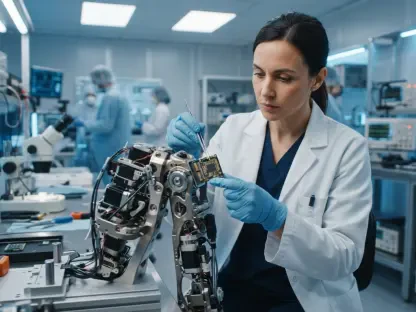
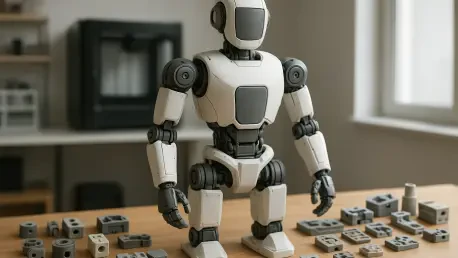
The robotics landscape has long been defined by high walls and proprietary secrets, where the most advanced humanoid machines remain locked behind corporate NDAs and multi-million dollar research grants. The collaboration between hardware giants like Nvidia and platforms like Hugging Face signals a

Mobile applications now integrate powerful engines like Flux 1.1 Pro and GPT-Image to produce studio-quality visuals directly on a smartphone. This shift represents a significant departure from earlier years when high-end generative art required desktop workstations with massive thermal capacities

Reservoir managers can now utilize a horizon-adaptive framework to select specific AI architectures based on the ecological mechanisms they need to track. This development addresses a long-standing conflict in environmental science between the rigid accuracy of physical models and the raw

Nearly two hundred participating locations in Los Angeles now utilize autonomous sidewalk robots to facilitate local food delivery through the Grubhub and Wonder networks. This widespread adoption marks a pivotal moment for Serve Robotics, as the company transitions from small-scale testing to a

The consolidation of robotics and uncrewed systems into a single AI and Autonomy category shifts focus toward multi-agent swarm intelligence and the security of foundation models. This fundamental shift marks a new era in American technological policy, as the White House Office of Science and

The need for manual troubleshooting and onsite configuration is drastically reduced as devices learn to resolve their own connectivity issues autonomously. In the current landscape of 2026, the Internet of Things has moved past its infancy where sensors simply gathered data for remote processing.