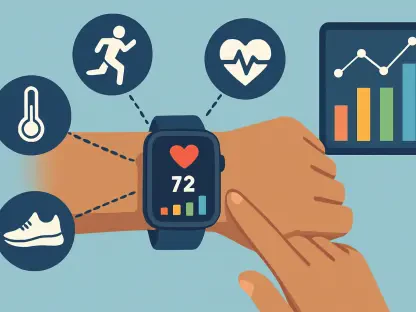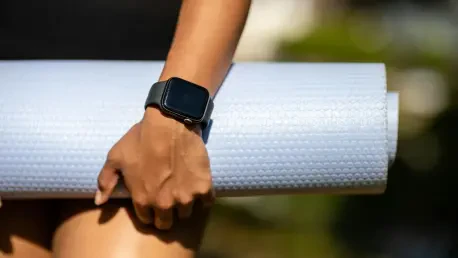
The rise of wearable health technology in the United States has sparked a significant conversation about its potential to transform public health outcomes. With U.S. Health and Human Services Secretary Robert F. Kennedy Jr. advocating for the widespread use of health trackers, there is an active

The healthcare sector is experiencing a significant transformation, with digital health technologies leading the way in reshaping the medical devices market. Predicted to grow at a compound annual growth rate (CAGR) of 7% from 2025 to 2030, this market expansion is attributed to technological

In a world increasingly driven by technology, wearable health devices have emerged as a significant influence on personal healthcare management. These gadgets, such as smartwatches and fitness trackers, along with sophisticated tools like smart rings and continuous glucose monitors, are promoted as

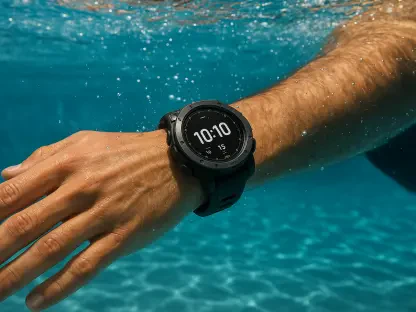
In a world saturated with technology where every device purports to be smarter than the last, the introduction of Garmin's Venu X1 raises a compelling question: Is this the innovation that will pivot the trajectory of smartwatches? As traditional boundaries blur between fitness and lifestyle

In an era where digital innovations continue to reshape the health and wellness landscape, the advent of invisible health monitoring marks a compelling evolution in preventive healthcare technology. Transitioning from visible wearables like fitness trackers and smartwatches, this shift to seamless

Technology's role in reshaping personal health has never been more evident. In an era where digital devices have become integral to daily routines, wearable technology is gaining traction at an astonishing pace. Reports suggest that nearly half of all smartphone users now integrate wearables into